One thing is certain about Cali – it is not a city that goes unnoticed. Before going there, I had heard a few contrasting opinions about it. Some people had advised me against visiting Cali, as – due to street crime and recent episodes of social unrest – it is not considered one of the safest places in Colombia. Conversely, others had enthusiastically recommended a visit, arguing that the city’s energy is something unique to experience.
‘I bet you’ll want to stay more than three days in Cali. It’s such a charming city’ – ciudad encantadora – my host Lisa had said before I had even arrived in town. Her words proved prophetic: Cali’s charm bewitched me and, after more than a week spent there, I found it hard to leave.
For its many charms, Cali has, over the years, gained a number of different appellations. Worldwide, Cali is known as the ‘World’s Capital of Salsa’ – Capital Mundial de la Salsa – as it is one of the places where salsa music and dance have been most intensely experienced, embraced by locals, and interpreted and transformed to give rise to a unique style: salsa caleña. The 19th-century writer Jorge Isaacs, originally from Cali, referred to the city as the ‘Sultana of the Valley’ – Sultana del Valle – for its grandeur and elegance, standing out in the Cauca Valley for its natural beauty and cultural resonance.
Another appellation I particularly like – and fully endorse – is ‘Branch of Heaven’ – Sucursal del Cielo. Cali is a place full of joyful people who enjoy the vibrant city life and the surrounding natural beauty and biodiversity – most of the time in the sunshine, under a clear blue sky. That was also my experience while staying in Cali: I was surprised, fascinated, and infected by its joie de vivre.
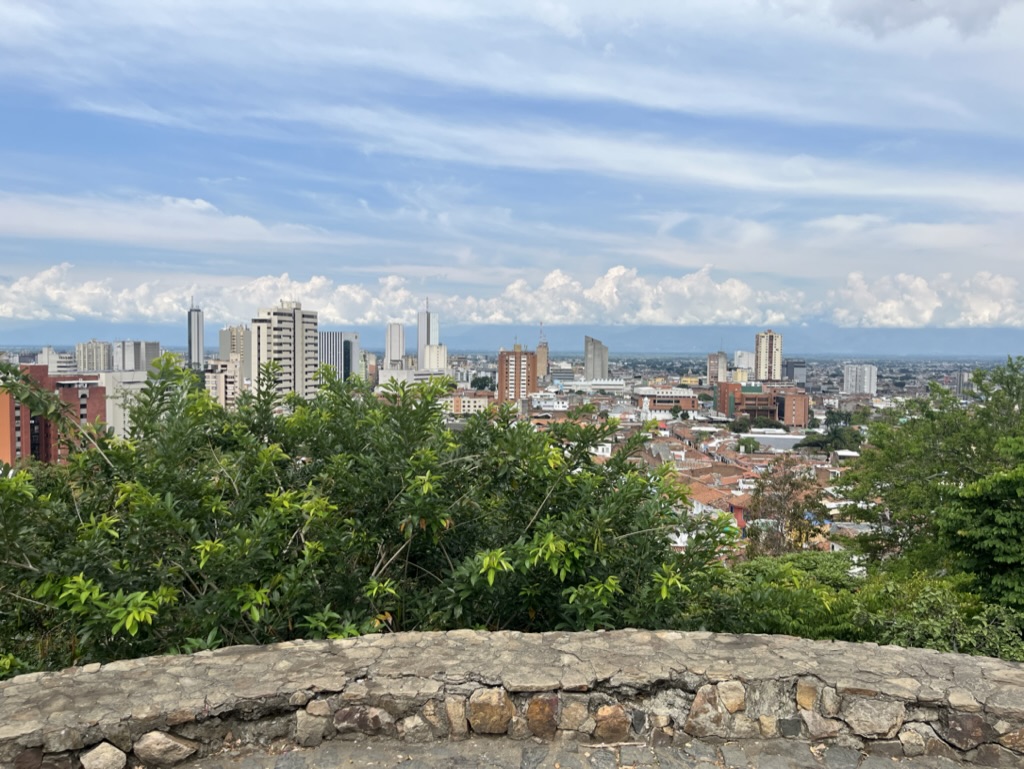
I had chosen to travel to Cali for one main reason – salsa. I knew Cali had become a popular place, among visitors from all over the world, to immerse oneself fully in salsa rhythms: taking dance classes in one of the many schools across the city and joining endless nights of dancing – locally called rumba – any day of the week. My initial plan was to stay in Cali for a few days, feel its energy, take a few basic salsa classes, and leave. In the end, I took fifteen hours of classes, danced most nights I was there, and left with the feeling that I could have carried on this routine – quite unusual for me – for much longer.
But why did salsa become so prominent in Cali? To answer this question, I visited the oldest museum in the city entirely dedicated to salsa, located in the working-class neighbourhood (Barrio Obrero). As a side note, there are six salsa museums worldwide, and four of them are in Cali. At the museum, I was welcomed – together with other visitors from Colombia and Ecuador, and my German friend Silke – by Carlos Molina, the cheerful founder. His father – also named Carlos Molina – was a photographer who, over 50 years, had captured almost all the most important salsa performers worldwide. This unique collection has been exhibited in the museum since its opening, organised by place of origin – Cuba, Puerto Rico, Colombia, and Venezuela.
The salsa museum in Barrio Obrero is not only a fascinating place for curious visitors, but also a beautiful social and cultural project for Cali’s residents, Carlos told us. The museum’s foundation is committed to empowering and educating young people from Barrio Obrero – currently a rather poor and underserved neighbourhood – through music classes and involvement in its initiatives. It also helps strengthen the neighbourhood’s public environment and educational spaces, for instance by setting up a dedicated Calle de la Salsa, currently under construction.
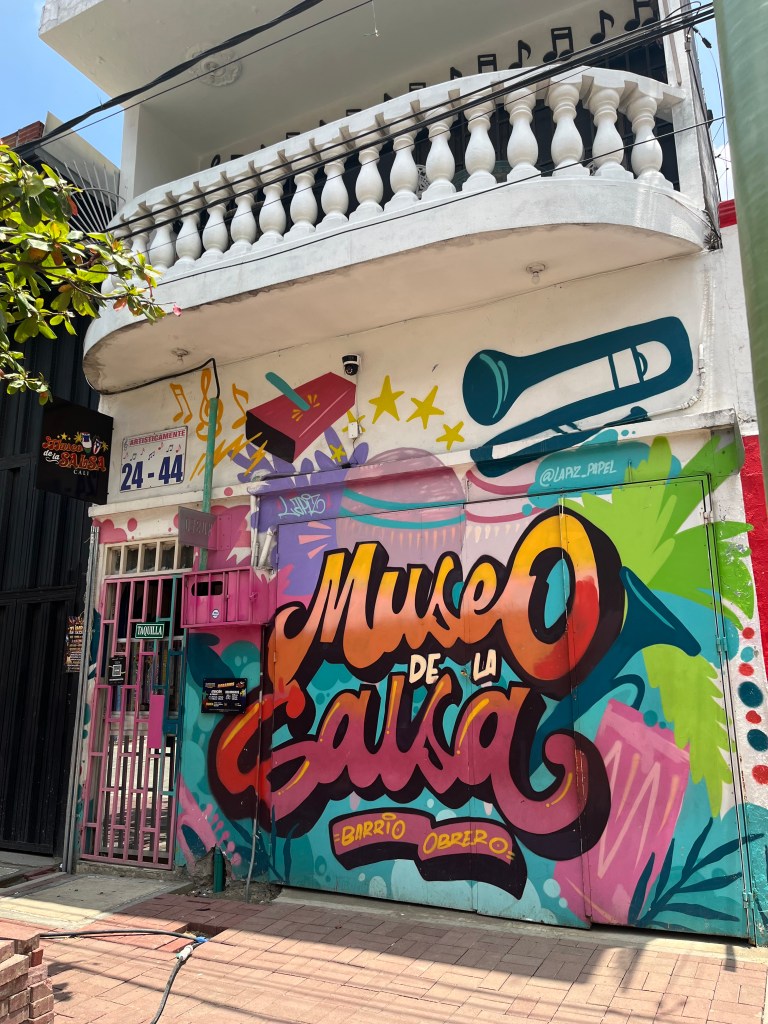
Carlos then left us in the capable hands of Marlon – whom he considers like a son, he confessed – a young and witty Caleño who has acquired an impressive knowledge of salsa thanks to the museum’s educational programme, becoming an excellent storyteller. Marlon guided us through the history of salsa while offering several musical interludes – featuring some of the most iconic salsa pieces in Cali and worldwide – during which standing still was not an option.
So, while enjoying a little rumba in the museum hall, we learned that salsa was born in Cuba from rhythms played by African people using percussive instruments such as the conga. Early Cuban productions – referred to as son cubano – became popular in Cali thanks to a radio station, Radio Progreso, which began broadcasting this music in Barrio Obrero in the late 1920s. Around the same time, salsa records became available in the neighbourhood, transported by railway from the port of Buenaventura on the Pacific coast. Barrio Obrero thus became a key place to listen to and purchase salsa records.
In the 1960s and 1970s, frequent salsa gatherings – called aguae’lulos – took place in people’s homes or in large halls in working-class neighbourhoods. These popular dance venues became known as ‘grilles’. People would dance intensely until late at night without consuming alcohol, drinking only soft drinks such as agua de lulo (hence the name aguae’lulos) or fresh juices.
As a salsa epidemic spread across Cali, the local style of dancing also began to evolve. Not content with the slow pace of recorded salsa at the time, people in Cali found a practical solution: they increased the speed of vinyl records from 33 rpm to 45 rpm. The singing voice sounded slightly distorted, but the music served its purpose – to drive Caleños and Caleñas to move as quickly as possible. In this way, Cali’s salsa style became an impressive display of fast, agile footwork, incorporating elements borrowed from rock’n’roll, jazz, bolero, and tango.
Over the years, salsa became deeply embedded in the culture and way of life in Cali. Local musicians and performers emerged – such as Grupo Niche and Guayacán Orquesta. Some of their songs celebrate Cali itself, with words of love and appreciation – the most famous being ‘Cali Pachanguero‘, ‘Cali Ají’, and ‘Oiga, mire, vea‘. As Caleños and Caleñas tirelessly practised and refined their beloved rhythms, the international salsa scene began to recognise their talent. Some of the world’s most exceptional salsa dancers were – and still are – from Cali.
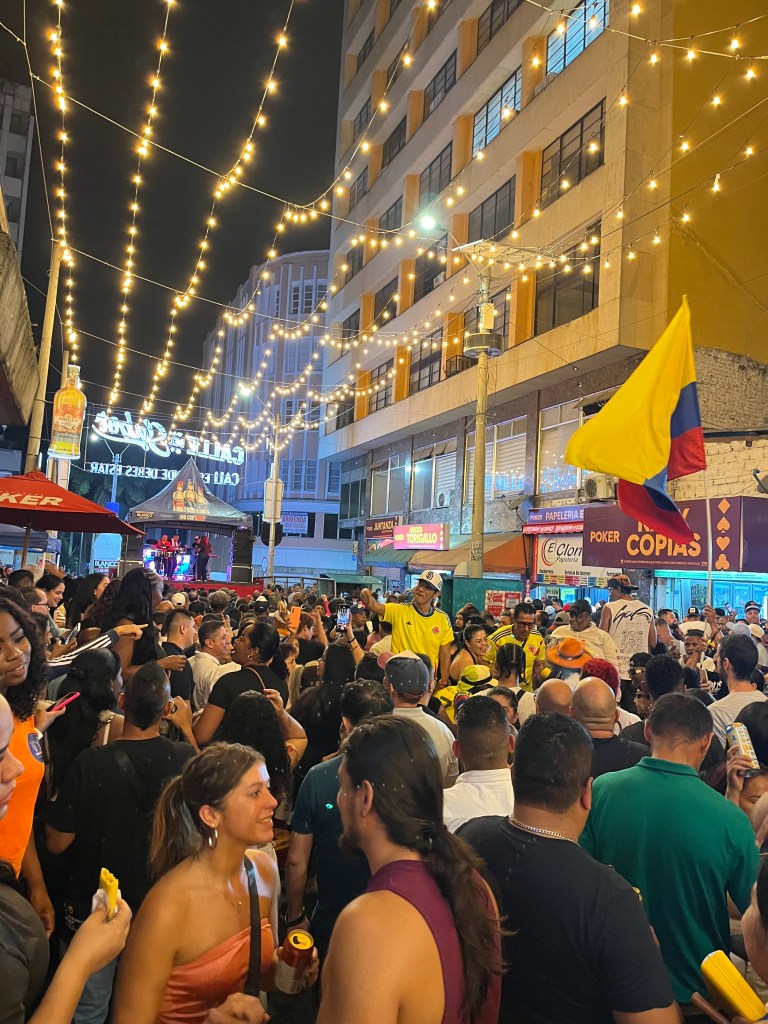
Nowadays, every day of the week is a good day for rumba in Cali. Open-air rumbas are vibrant gatherings of dancers across the city, particularly along Calle del Sabor, Bulevar del Río, and Calle del Pecado. Locals and international enthusiasts alike gather to watch, join in, or simply follow the rhythm using traditional instruments such as campanas and güiros. Numerous salsa clubs are popular throughout the city, including the well-known Topa Talandra – which offers daily classes in increasingly complex Cali-style steps – and El Mulato Cabaret, where professional dancers perform spectacular, partly acrobatic choreographies.
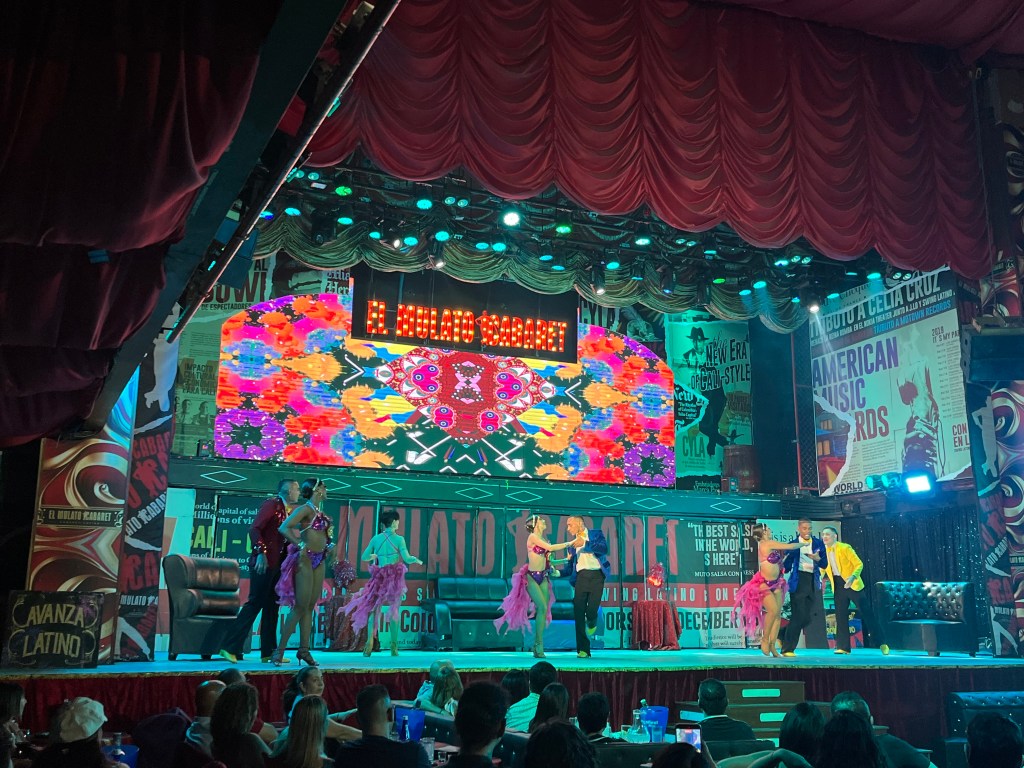
It is almost impossible to stay in Cali and avoid the salsa scene. I was quickly and completely absorbed by it, to an extent I would never have expected. The hours I dedicated to classes and practice were clearly not enough to reach the level of a Caleña, but they enabled me to grasp what salsa truly means in Cali – not just a dance, but a way of life.
Through salsa caleña, I experienced – both tangibly and contagiously – one of the many forms that joie de vivre can take. I cannot help recalling the words of a popular salsa song – ‘La vida es un carnaval‘ by the Cuban singer Celia Cruz – that I often heard during Cali’s rumbas: “No hay que llorar, que la vida es un carnaval y las penas se van cantando“. There is no need to cry; life is a carnival, and sorrows fade away through singing – or dancing, in Cali’s case.
These words capture the essence of what Cali taught me in little more than a week. This is what I will always feel when I think of this charming city, a city that is a few (salsa) steps closer to heaven than the rest of the world – truly, a Sucursal del Cielo.
 Gracias a la vida
Leave a comment