A few months ago, when I decided to spend two weeks as a volunteer at Tierrita Linda, a bio-construction and permaculture project in Popayán, I had little idea of what that would entail. Now, after completing those two weeks, I have gained a better understanding—and a tiny bit of experience and knowledge—of a forward-looking community project that creates complex, beautiful buildings out of natural materials (bamboo, clay soil), cultivates and harvests the earth’s produce sustainably, minimising waste and maximising a harmonious and respectful way of living with nature.
‘Lo que siembras, cosechas’ —you reap what you sow,— Arnold told me one day as he described the development of his project over its first five years. Arnold is a charming and enthusiastic Colombian man, originally from the department of Cauca, who started Tierrita Linda five years ago on a piece of land with no buildings. Despite having very few comforts at the beginning—no bed to sleep on, no toilets or showers—he worked hard and patiently to put up the first structures, developing and refining his skills as a bioconstructor. Early on, Anna—a talented former volunteer from Switzerland and now Arnold’s partner—joined the project and became, like Arnold, a co-creator of the expansion and flourishing of Tierrita Linda.
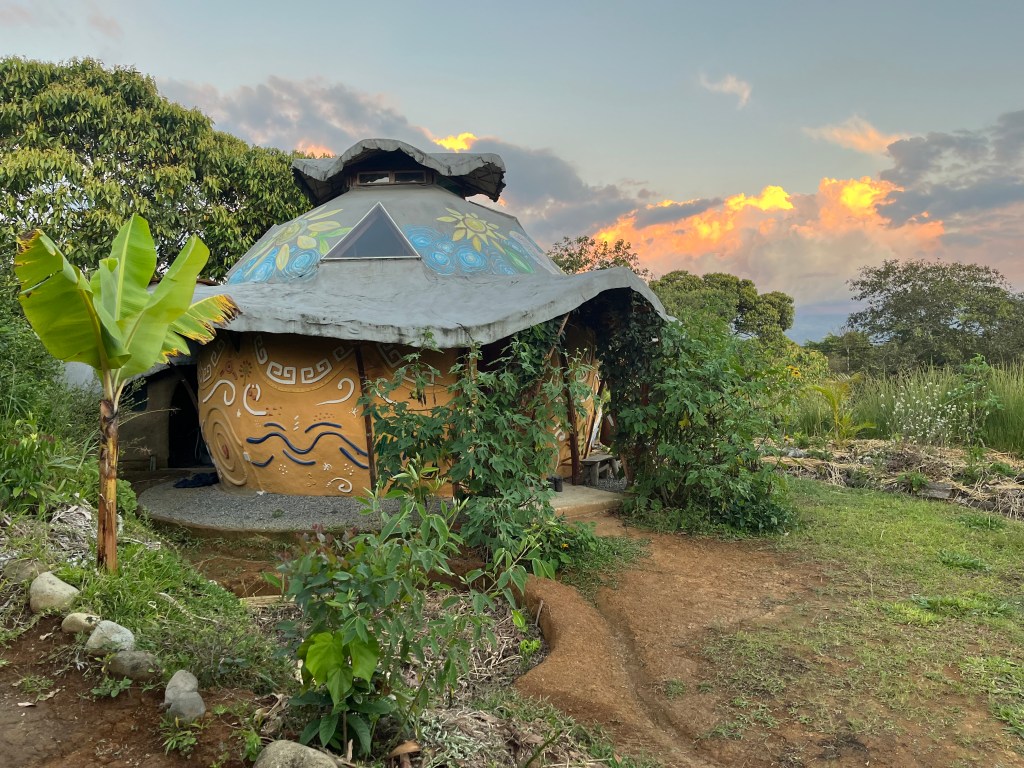
Five years ago, Arnold planted a small bamboo forest—a guadual—made up of guaduas, which are the species of bamboo that grow in Latin America. Now, five years later, he was able to show us the towering guadua plants emerging from the ground, standing close together, some younger, some older. Belonging to the family Gramineae, bamboo plants are like giant grasses. As such, they are exceptionally fast-growing and regenerative, capable of growing up to 91 cm a day and of regrowing from clumps that generate new shoots. These characteristics enable the sustainable harvesting of bamboo every few years. In addition, its remarkable strength and durability make it a perfect material for bio-construction. Growing bamboo also benefits the planet, as these plants sequester carbon up to three times faster, while releasing more oxygen, than many other tree species.
Tierrita Linda is also home to a flourishing vegetable and fruit garden, cultivated according to the principles of syntropic farming. This method, developed by the Brazilian farmer Ernst Götsch, aims to respect and mimic natural processes as closely as possible. Drawing inspiration from the simultaneous growth of different plants in natural ecosystems, all plants in syntropic gardens are grown together. Although these plants have different life cycles and varying light and shade requirements, they exist in dynamic cooperation, providing one another with nutrients and optimal living conditions. Each plant occupies a different stage of development—early plants such as grasses and legumes prepare the soil for later ones, such as trees, in a process known as ecological succession. This method is considered effective in regenerating and strengthening the soil—taking advantage of nutrients released by plants in combination with natural fertilisers—as well as restoring biodiversity and creating a more resilient and sustainable agricultural system.
As dedicated syntropic farmers, Anna and Arnold have planted a great variety of crops—vegetables and legumes, fruit trees, and many aromatic herbs. Although it can initially be difficult to plan and navigate a syntropic garden—since all varieties of plants grow in a common space—Anna and Arnold have undertaken this task with care and dedication. Now, as the early plants have matured while supporting the growth of later ones, they have begun to harvest the fruits of their careful work, with a sense of joyful fascination whenever a new plant begins to thrive. ‘The beauty of farming is that it teaches you patience, and to accept the natural course of things,’ Arnold told me one day. ‘You cannot hasten nature. If you plant an avocado tree, you cannot expect to be eating avocados the next day. But you will feel a deep sense of appreciation when, years later, the tree you have cared for produces its first avocados.’
Not only have Arnold and Anna planted bamboo and garden crops over the years, but they have also sown the seeds of a vibrant and dynamic community of local and international volunteers—people who lend a hand with the project’s activities, learn from the project leaders and from one another, and share effort, meals, and moments of fun and laughter.
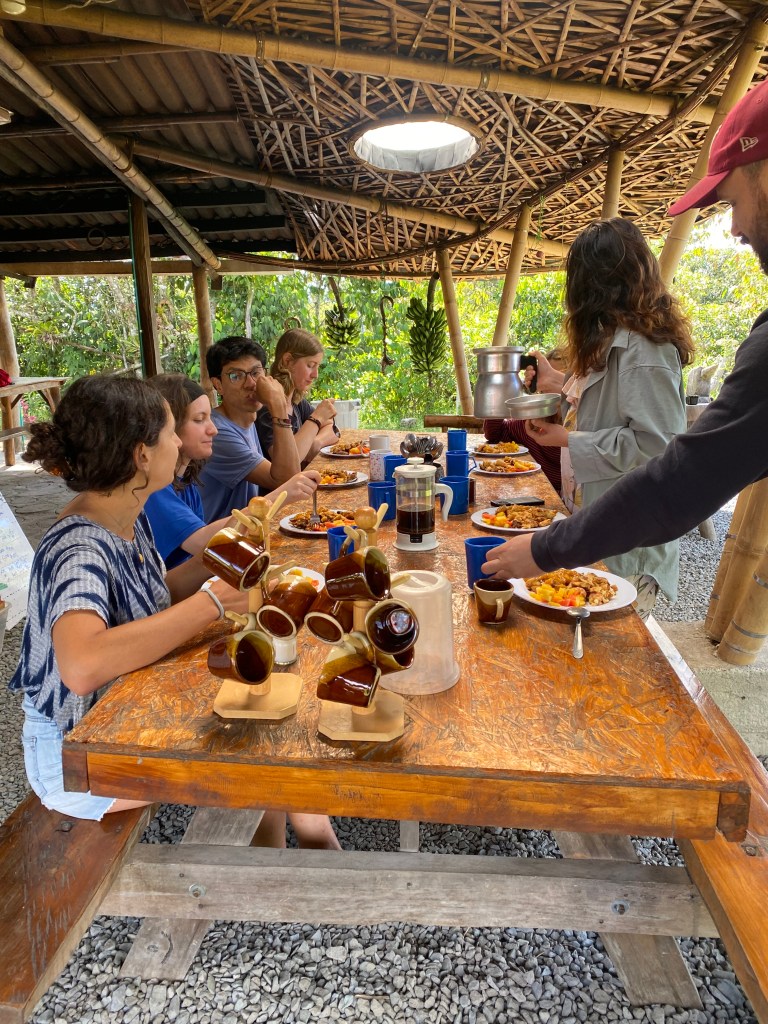
Whenever he interacts with the—mostly foreign—volunteers, Arnold adopts the calm and patient attitude of a teacher. Keen to ensure that everyone understands, he slows down his speech, making his words some of the clearest you might hear in Colombia. Yet he rarely misses the chance to add a few playful Colombian expressions, such as lindo pa-lindo, listo ca-listo, or melo cara-melo. In addition, he never—ever—starts working without turning on a Colombian music playlist and singing along with unrestrained passion. ‘Colombian people cannot live without music,’ he said one day. ‘Music helps people forget the difficulties they face in their lives or across the country. Despite all the challenges, music makes Colombians some of the happiest people in the world.’
I helped with many different activities during my stay at Tierrita Linda—cutting and polishing guaduas, placing them in a pool to be naturally “immunised”, removing weeds in the garden, making compost, reorganising materials, and extending the walls of a structure—but the experience that impressed me most was preparing the clay mixture (mezcla) used to fill and cover walls.
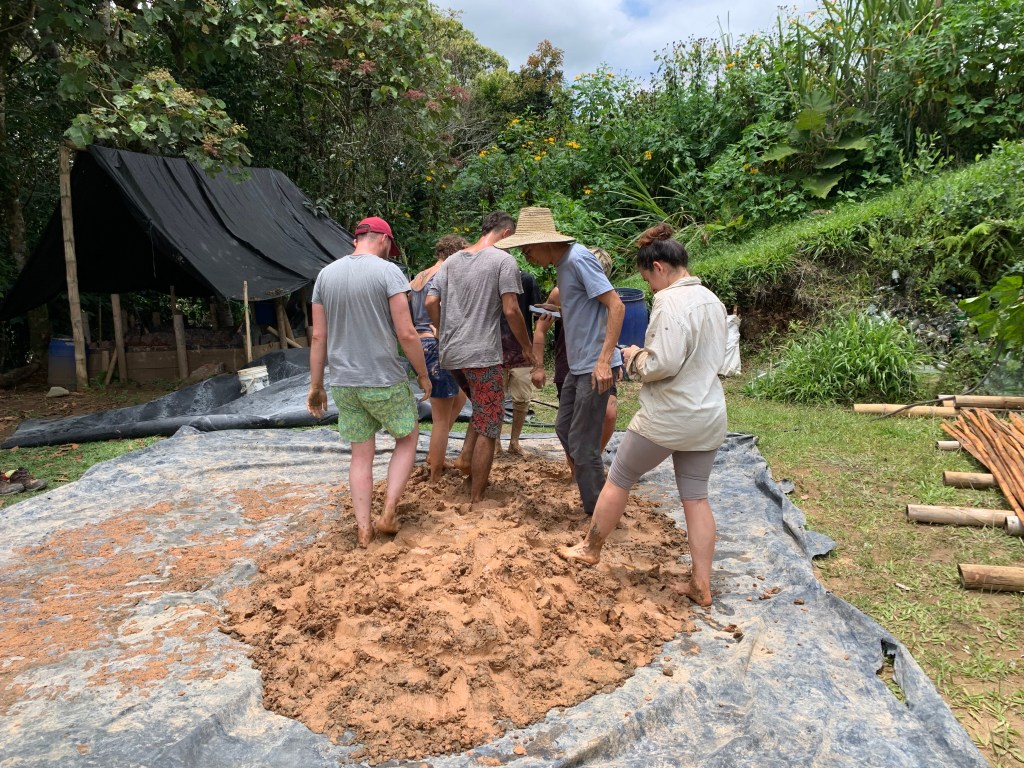
Making the mezcla was not only very physical—more demanding than I had expected—but also one of the most enjoyable experiences to share with fellow volunteers. It felt a little like cooking—with soil, sand, and clay as ingredients—but required far more energy. Often, we stood with our feet and lower legs immersed in the mixture, stepping and jumping on it to warm it, break up lumps, and blend it as thoroughly as possible. To the rhythm of the traditional Andean song Zapateando Juyayay—which evokes communal and festive dancing—the making of the mezcla became a tangible expression of unity and cooperation, of working together as a small community.
From Arnold, I also learned the meaning of minga, an Andean Indigenous tradition of collective community work—such as agriculture, construction, and the maintenance of public and natural spaces—carried out for the wellbeing of the entire community. For Indigenous peoples, minga holds deep significance: it embodies unity, solidarity, and reciprocity. In recent times, the term has also come to refer to a resistance movement among various Indigenous communities—many of them in the department of Cauca—advocating for their rights. The minga movement calls for the protection of public spaces and local territories, respect for cultural identity, and inclusive participation in the socio-political life of the country.
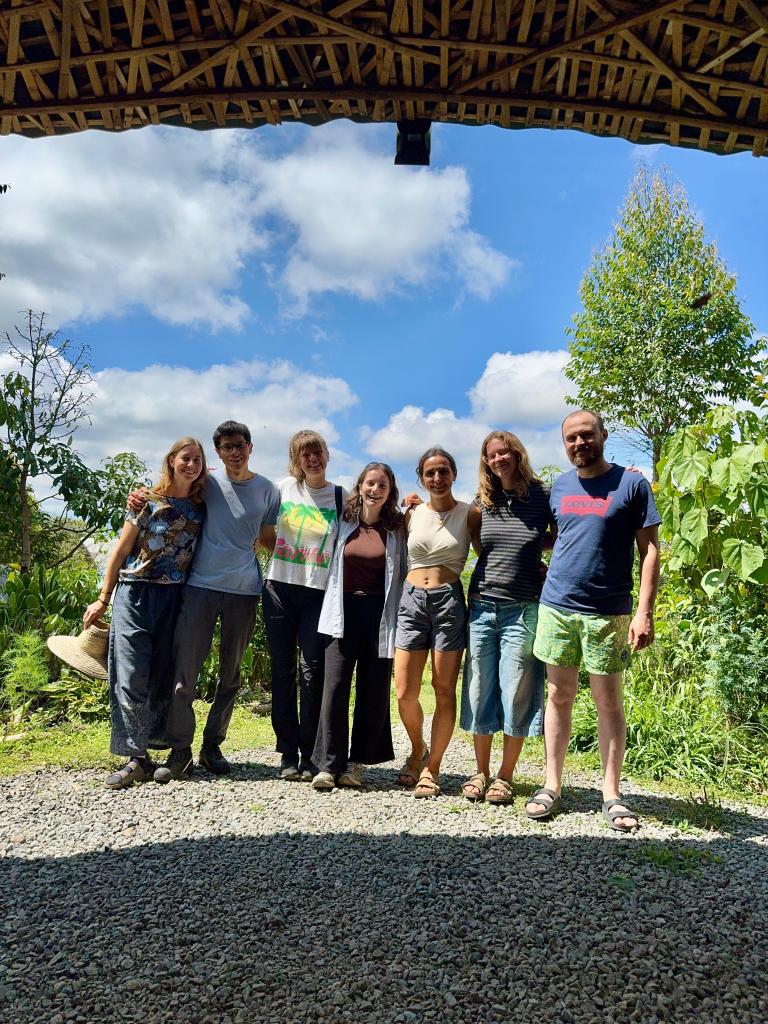
During my time at Tierrita Linda, it often felt as though we were taking part in a minga. The volunteer work was collective and collaborative, dedicated to improving a place rooted in giving and sharing—for the wellbeing of both present and future volunteers. Without any doubt, Arnold and Anna have sown much—alongside guaduales, forests of people supporting one another—and they are now reaping even more. Filled with beautiful plants and people, theirs truly is a Tierrita Linda—in both name and spirit.
 Gracias a la vida
Leave a comment