For the Misak indigenous people, the tulampiya is not only a traditional house made of mud and straw, but a sacred place of gathering and exchange—where elders pass on their knowledge to the community, and where people cultivate and share a deep sense of respect for nature. A week ago, I had the honour of being welcomed into such a tulampiya, and of understanding—through the words of a young Misak man—some of their powerful indigenous wisdom.
I travelled to Silvia, a municipality in the region of Cauca, with a cheerful group of fellow volunteers—two Germans, one French, one Czech, and two Italians (including myself)—all of us involved in a beautiful bioconstruction project at Tierrita Linda (more on this in the next blog post). The morning bus journey from Popayán, along winding and rather rough mountain roads (Silvia is located at 2,600 metres above sea level), seemed endless. When we arrived, we were glad to catch some fresh air and to take in—through our eyes—all the details of a place that, from the very first moment, intrigued us.
To start the day well, we entered one of the many home-style restaurants around the main square, where Yolanda and Gloria warmly welcomed us and quickly prepared an abundant Colombian breakfast—including rice, eggs, beans, and a patacón (double-fried plantain). I had my first café con queso, an interesting Colombian take on coffee in which a piece of white cheese is dipped into black coffee.
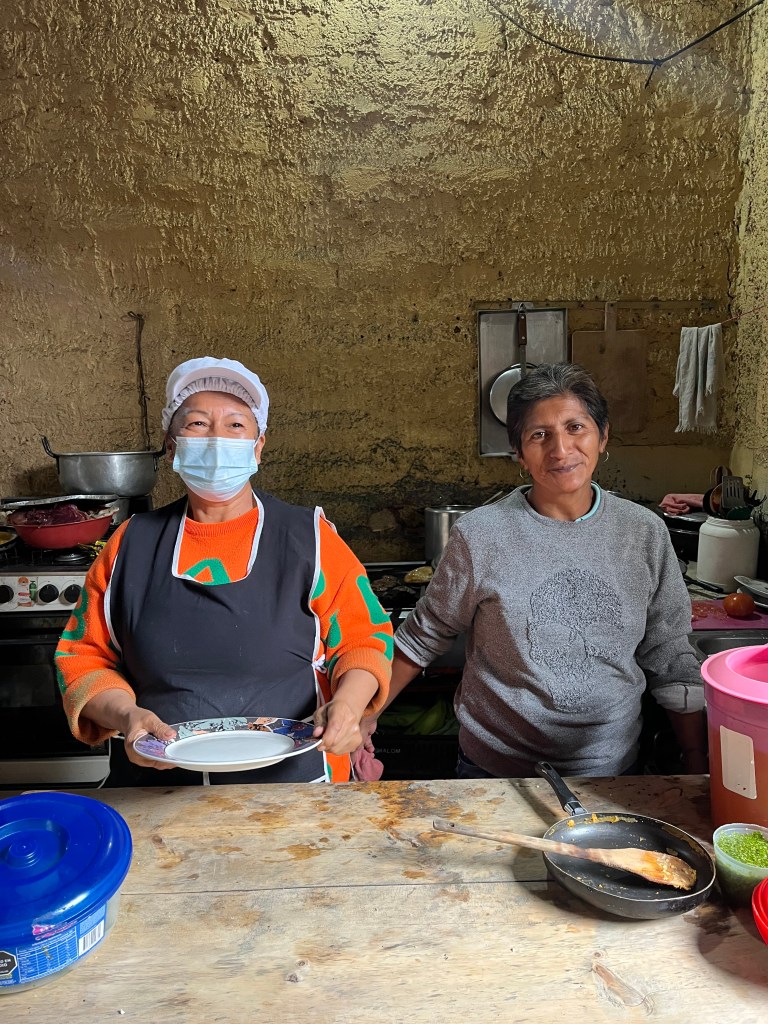
“Silvia has nothing to envy of Switzerland,” Luis Eduardo—who was sitting next to our table—told us, as he calmly sipped his café con queso. “That’s why they call it La Suiza de América Latina (the Latin American Switzerland).”
Silvia is a truly authentic indigenous town in the region of Cauca which, for many centuries, has been the main hub of the Misak people. On a typical morning, the streets are filled with people wearing traditional clothing—blue skirts and dark ponchos for women, dark skirts and blue ponchos for men, along with finely decorated scarves and hats—colourful (often old) buses and jeeps shuttling people around, and cars with open doors selling all sorts of goods.
Once a week, a chaotic and colourful market takes place near the main square, where all sorts of goods are displayed and sold: locally grown fruit and vegetables, many varieties of papas, meats of different cuts, staple foods such as rice, corn and raw sugar, as well as household products, clothes, herbal remedies, jewellery, and even musical instruments. On the sidelines, small cooking stalls serve bowls of traditional soups, arepas, and copious amounts of fried food.
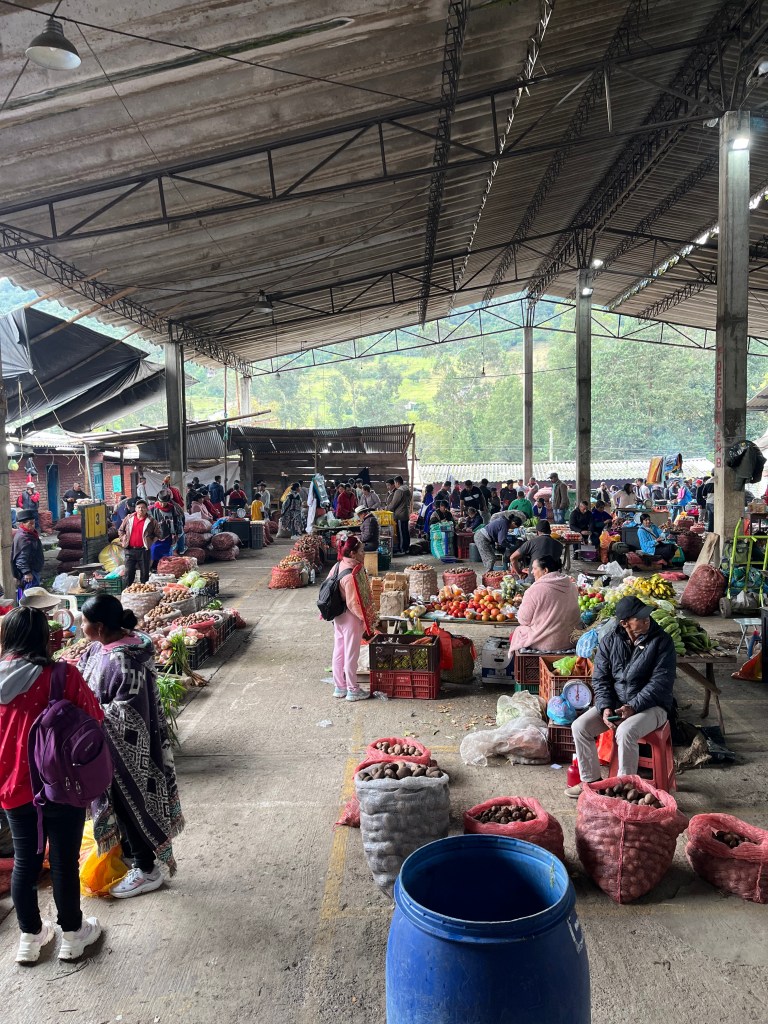
Despite the picturesque mountain views surrounding it, Silvia has very little in common with the real Switzerland.
After more than an hour spent wandering around the market in awe, we stepped into a shared jeep that took us to Las Delicias, a botanical garden and community project founded more than 25 years ago by an alliance of Misak families. Frederik Wilson, a young Misak man impeccably dressed in traditional clothing, welcomed us at the entrance. With his kind smile and serene demeanour, he introduced the project and guided us towards the tulampiya.
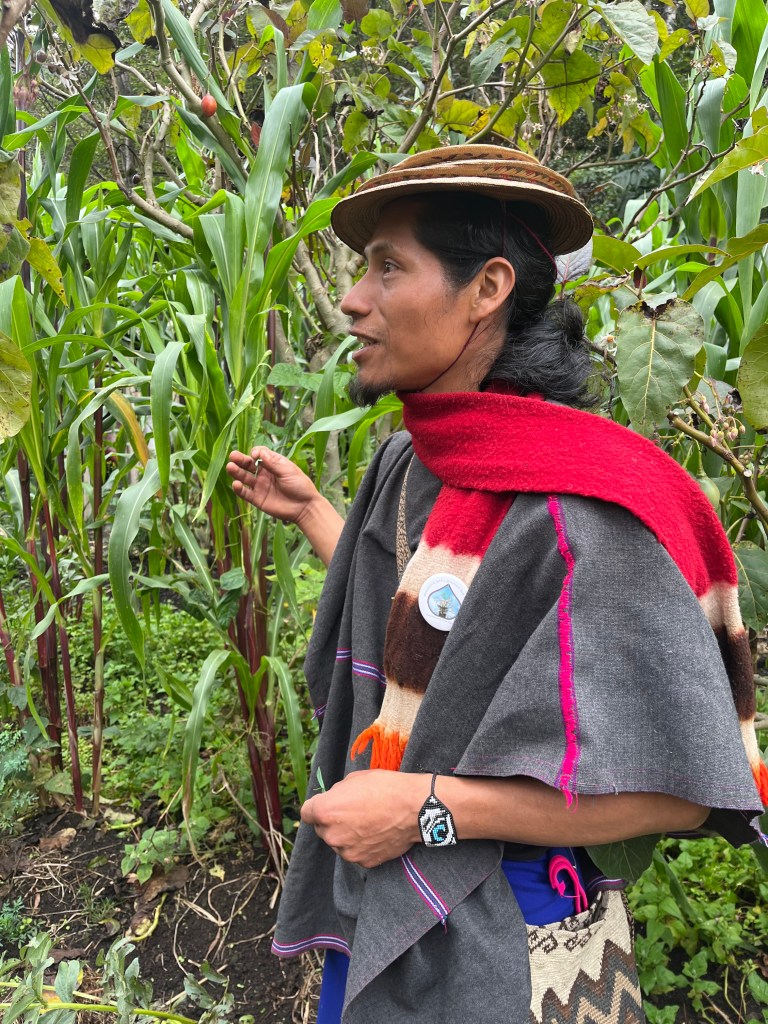
Before entering, we were invited to take part in a ritual of refreshment—called Pishi in Namuy Wam (the Misak language). We took a bunch of sacred herbs soaked in water from a round ceramic pot and poured a few drops over our bodies, refreshing ourselves and connecting with nature. This is a ritual the Misak perform before entering the wilder mountain territories—asking the mountains for permission to enter—as a gesture of profound respect for the natural environment, which they regard as full of spirit and sacredness.
Nature is, for the Misak, the sacred source of all life, and life itself is seen as a kind of fabric—all living beings are interwoven and interconnected. Recognising their fundamental dependence on the natural environment, all aspects of Misak society—culture, education, nourishment, economy, medicine, and spiritual life—are rooted in nature and in the local territory, which provide the means to live in a prosperous and harmonious way.
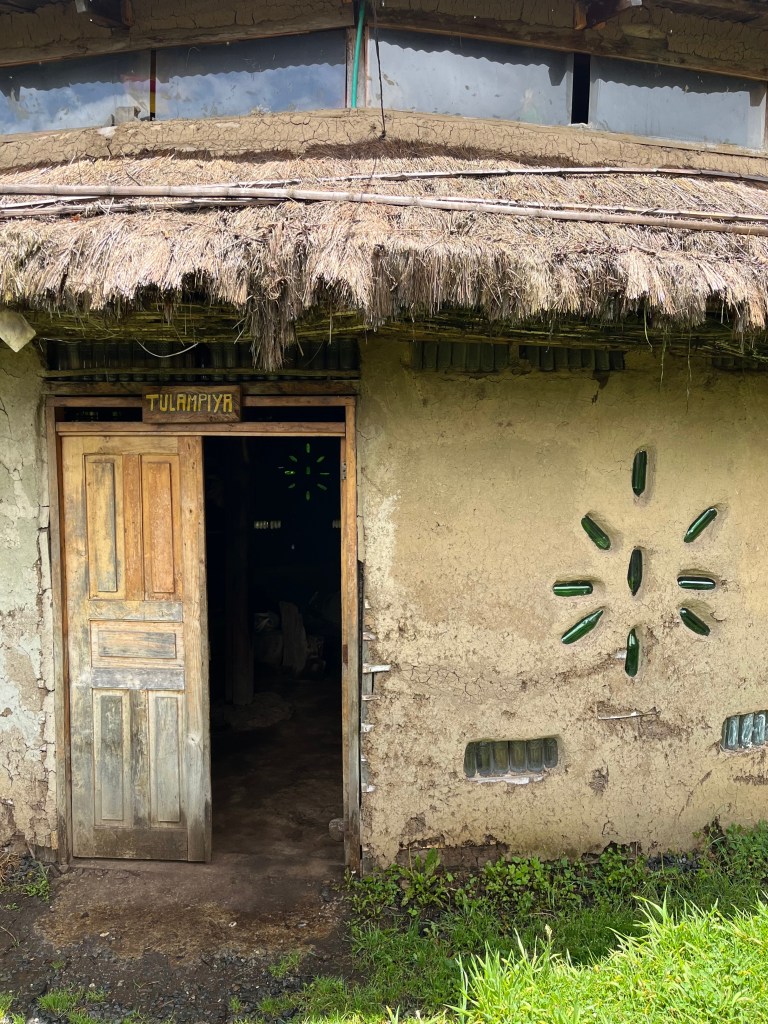
We entered the tulampiya, a simple yet welcoming home consisting of one large circular space. Only a small amount of light filtered through the windows—made from recycled glass bottles—giving the interior a slightly mysterious atmosphere, while the central fireplace immediately drew our attention, offering warmth and cosiness.
As we sat around the fire—the space dedicated to community gatherings and discussions—Frederik explained that Mother Nature is both the material and spiritual source for constructing the tulampiya. The four natural elements—Isik (fire), Nak (wind), Pi (water), and Pire (earth)—form its core, both physically and symbolically. Its structure, with a large round base and a gently sloping roof, alludes to the body of a woman. Each part corresponds to a part of her body: the wooden framework as her skeleton, the mud as her muscles and skin, the windows as her ears and mouth, and the roof as her head—in contact with the cosmos. Through its form, the tulampiya becomes a place of shelter and devotion to Mother Nature—the great life-giver.
Traditionally, the Misak do not believe in a single god, but in many, each corresponding to elements of nature that provide the gift of life. This belief underpins their deep respect for nature, which is expressed through their daily practices and traditions.
In the botanical garden, Misak families strive to keep these traditions alive. Relying on agriculture for self-sufficiency, they use the land in a conscious and sustainable way, accepting what it offers at different times of the year and favouring small-scale, local production. Thanks to their extensive knowledge of plants and natural resources, they produce healthy, locally sourced food and create natural products such as medicinal remedies, essential oils, preserves, honey, and beverages.
The Misak also believe that conflicts and rivalries in the world arise from humanity’s loss of connection with nature. As nature has come to be seen as something to exploit—rather than the source of life on which we depend—this has led to struggles over territory, resources, and power.
Although this region has not been spared from conflict, and indigenous communities still face injustice and discrimination across the country, the botanical garden stands as a hopeful project of preservation, regeneration, and peace. Through their commitment, the families involved have become guardians of indigenous knowledge, nature, and biodiversity.
Moreover, the project takes an open-minded and forward-looking approach, engaging in dialogue with diverse cultural and intellectual groups and bridging traditional and scientific knowledge for a shared purpose: promoting awareness and respect for the local environment. In an age of climate crisis, pollution, and biodiversity loss, their work is both vital and exemplary.
There is much to learn from the Misak worldview and traditional knowledge. As we—a group of curious young foreigners—entered the tulampiya to listen, ask questions, and share our perspectives, we were welcomed with openness. The tulampiya is a place of reciprocal learning—a space to practise the art of living in harmony with one another, with other living beings, and with nature as a whole.
So, come and join the Misak in their tulampiya.
 Gracias a la vida
Leave a comment