This is the story of how I arrived at one of the most peaceful places in the world, in the Colombian Amazon – a place called Fin del Mundo (End of the World) – while at the same time reading about the threatening, anything but peaceful state of affairs in the world, and thinking, in the back of my mind, of another potential kind of fin del mundo we should never move towards.
My arrival in Colombia, after a couple of months spent in Cuba, was a disorienting experience – like returning to a once familiar world after a period of life spent in a different historical time. I first spent a few days in Bogotá. It felt odd and, at the same time, comforting to be in such a hectic capital – I felt I could wander around aimlessly in complete anonymity among the continuous streams of people of all ages, locals and foreigners alike, on the streets.
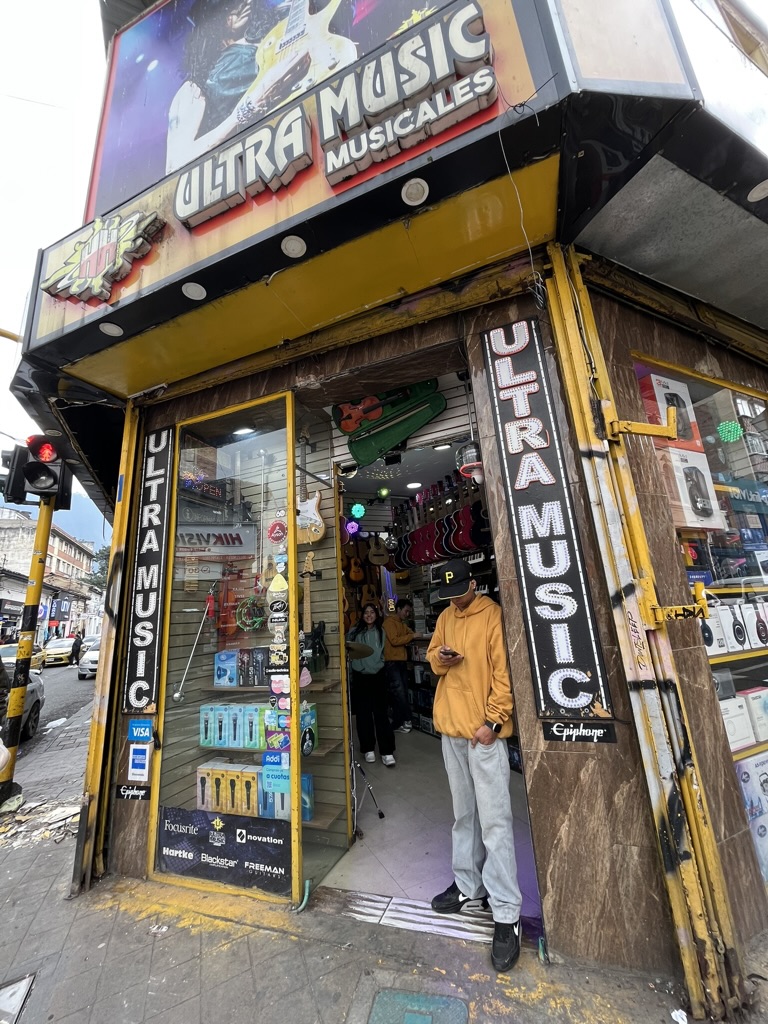
I walked around, somewhat overwhelmed by the number of shops of all sorts, products of all sorts, street food of all sorts, and restaurants of all sorts. The streets were full of cars. Lights were always on. The pharmacies were well stocked. There was a bank on every corner where I could withdraw some cash without worrying about fluctuating and unpredictable exchange rates. The supermarkets were large and full of all kinds of goods – local and imported, cheaper and more expensive – the options seemed infinite. I once walked past a street where a dozen music shops were selling guitars of all sorts and prices – and recalled the difficulties I had experienced finding a guitar in Cuba. It felt like there was too much of everything. It felt like everything was easy again – almost too easy to be true.
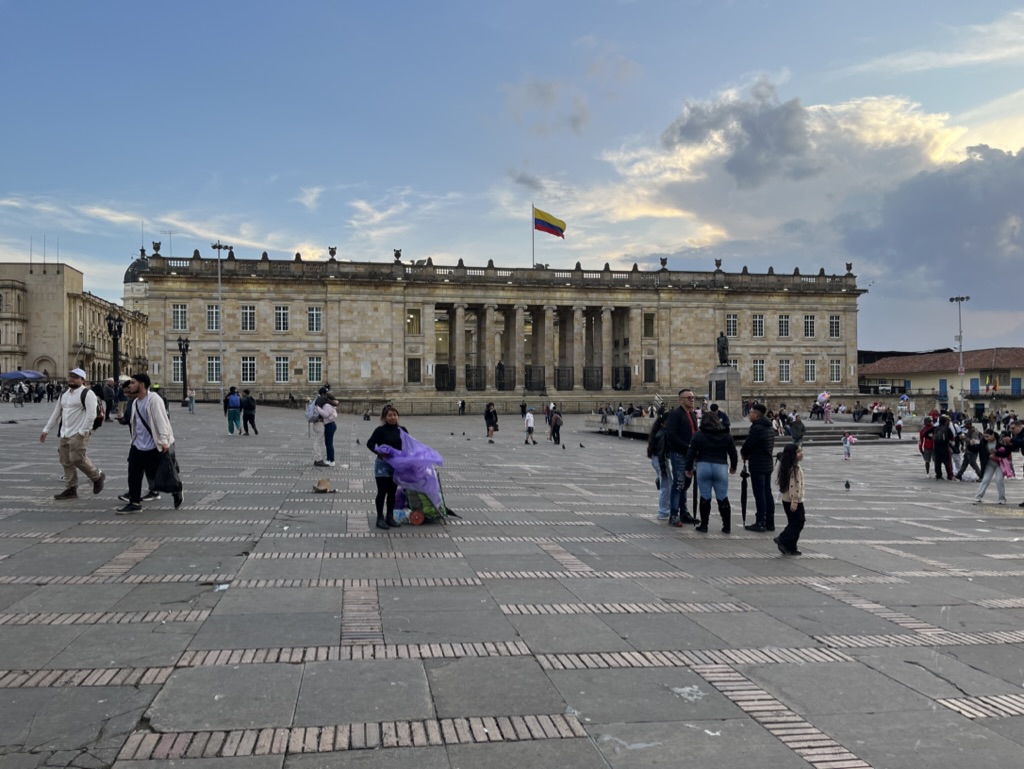
In Bogotá I met Jarec, a bright and skilful young woman who guided me through the streets of Bogotá on a walking tour. In addition to being a biologist and working as a schoolteacher, Jarec is a talented storyteller and guide, who shared with me her impressive body of knowledge on Bogotá’s historical facts, legendary anecdotes and cultural practices – knowledge she acquired thanks to her genuine curiosity and by listening to older generations, like her grandparents. She told me, with some disappointment, that most local people do not cherish the history of Bogotá and of Colombia as a whole – a history that has been marked by many conflicts and much violence. “Most people prefer to forget,” Jarec remarked. “But this carries a risk – the risk that we may make the same mistakes all over again. History, as controversial as it may be, needs to be remembered.”
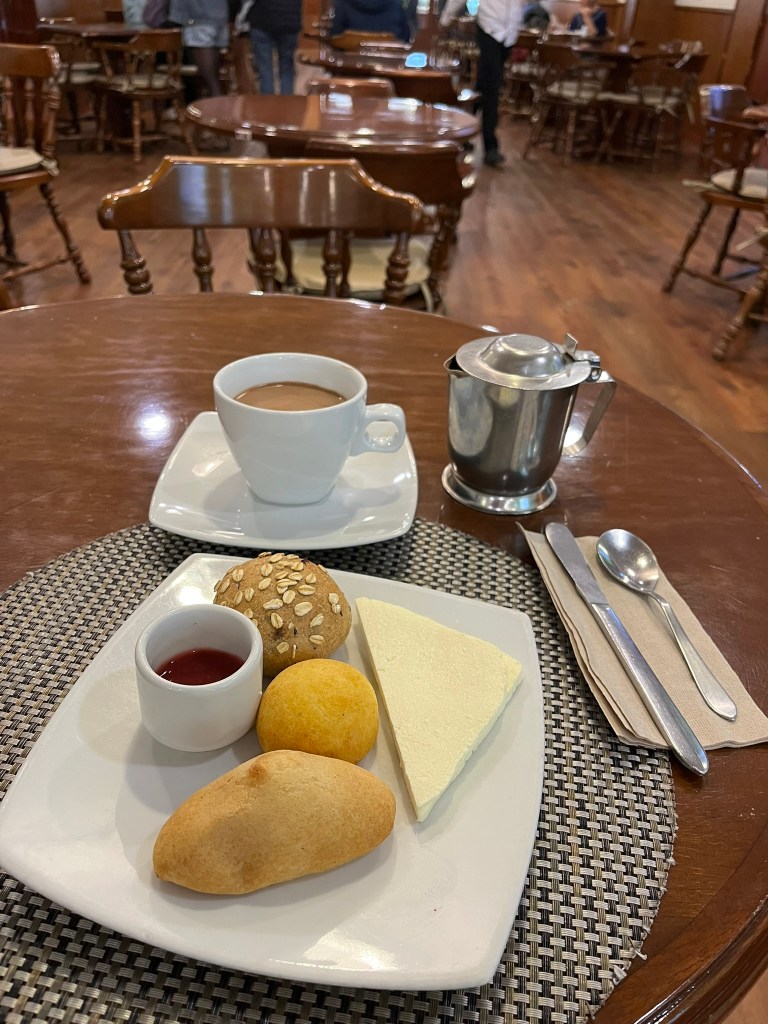
Attracted by the street food scene of Bogotá, I stopped many times for arepas con queso (especially arepas de maíz), buñuelos and empanadas. I sipped chicha, a fermented corn drink, in the colourful plaza of Chorro de Quevedo. I was amazed by the many kinds of delicious fresh juices made from fruits I had never heard of – lulo, curuba and borojó. Throughout the day I had several cups of tinto (the term Colombians use to refer to black coffee – not red wine) with panela, the tasty unrefined whole cane sugar commonly used as a sweetener in this part of the world.
I indulged in a chocolate santafereño, a copious cup of dark hot chocolate accompanied by bread, an almojábana (a small bread made from corn and cheese), and queso. One night, my quest for ajiaco (a traditional soup) brought me to the special and authentic family restaurant run called AFUEGO Ajiaco Bar. Luz Angélica, Luz María and Álvaro prepared a delicious vegetarian version of the soup for me and shared their excitement and a few great recommendations for my upcoming travels, while showing me a beautiful photographic book of Colombia.
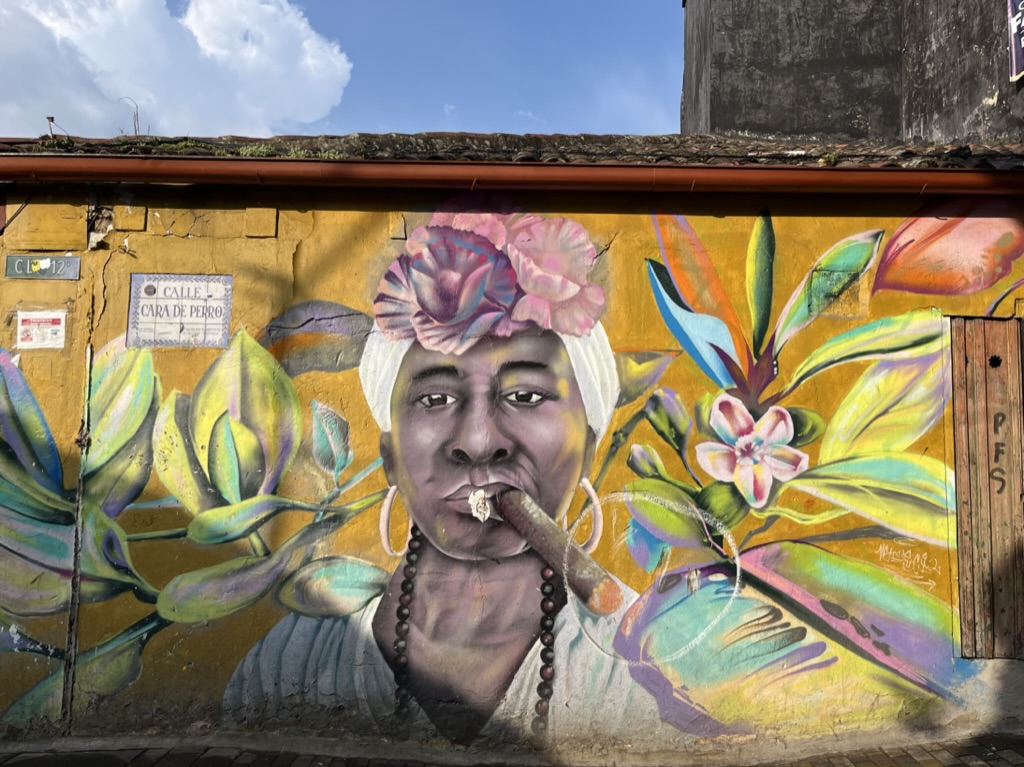
A few other experiences stood out. I spent some time in the fascinating space of the Biblioteca Luis Ángel Arango, one of the largest and best-equipped libraries in Latin America, enjoying the silent company of books and knowledge from all eras. I enjoyed admiring several pieces of Botero’s unique art – both paintings and sculptures – at the Museo Botero. At the Centro Cultural Gabriel García Márquez, many local (young) artists displayed their witty creations, using all kinds of materials and techniques, from pencil to graphic design. I enjoyed staying in Bogotá for a few days – it was a good landing place and the perfect bridge to my further travels around Colombia, a vibrant city where I found unexpected comfort and inspiration.
My journey to Mocoa, in the southern department of Putumayo, was unforgettable in a completely different way. I had decided to take a direct night bus that would take 14 hours to get there from Bogotá. We spent the first two hours trying to get out of Bogotá, stuck in traffic. Then the bus moved forward but in fits and starts – first accelerating on the winding roads and then suddenly braking, over and over again.
I admired the Colombian guy sitting next to me who could sit, wrap himself completely in a blanket, and sleep the entire time. I couldn’t. The bus journey was, for me, endless hours of half-sleep and abrupt awakenings.
When I arrived in Mocoa, my mind was anything but clear. I tried to get in touch with the retreat centre where I was supposed to do my volunteering, but I got no answer. I decided to give it a little time, so I sat in a café and waited. At noon, still no answer, so I decided to opt for plan B and looked for another accommodation. As I couldn’t think straight, I just booked – instinctively – the first thing that caught my attention: Posada La Fin del Mundo. It was just about the right moment to get to the end of the world, I thought, while my tired mind kept scrolling through the international news, reading about the intensifying conflicts in the Middle East.
The Posada La Fin del Mundo was a few kilometres away from the city of Mocoa and a 15-minute uphill walk into the Amazon forest. The Amazonian humidity and the backpack on my shoulders made it all a lot more difficult. While leading me towards the place, Abelino, a fit older man who helped run the family hostel, tried to tell me a few funny stories in quick Putumayan Spanish, but my brain couldn’t focus.
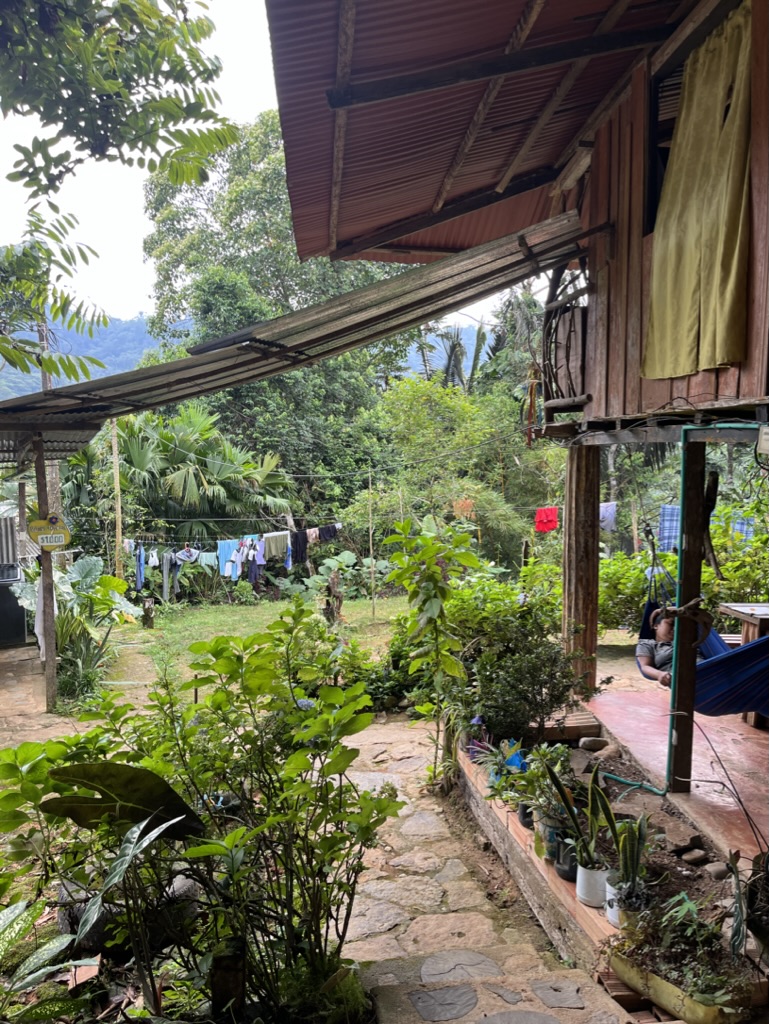
When I arrived there, after climbing the last stretch of stone path, I was completely exhausted. But that was – without a doubt – one of the most gorgeous places I have ever been. Three humble huts made of bricks and wood were hidden within the grand forest, surrounded by immense trees stretching endlessly in every direction. The courtyard, opening up to more forest and to the nearby Mocoa River, enclosed bright flowers, huge plants of every shade of green, a couple of hammocks, and a small pool whose natural water came directly from the neighbouring mountain. The place was peaceful but not silent. The music of nature – birds, insects, water and wind – was a constant and reassuring presence.
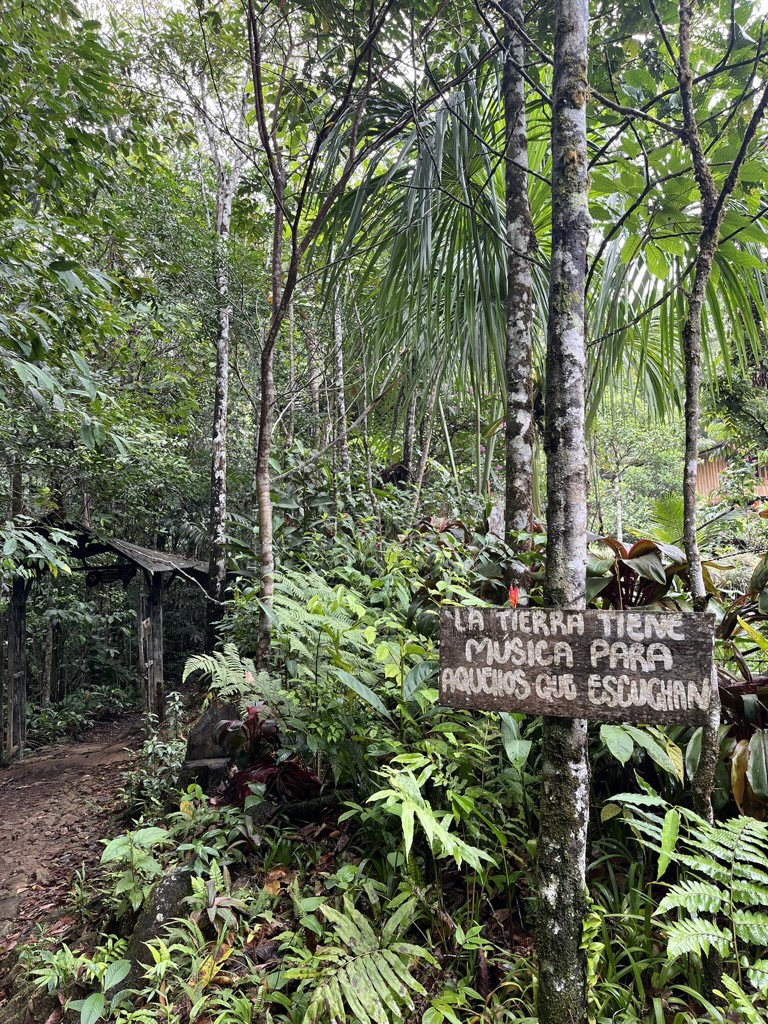
A few days later I reached the actual Fin del Mundo, a 70-metre waterfall hidden even further up the mountain and deep within the forest. Getting there was a mystical experience of encounter and exchange with the forest. I climbed a narrow path up the mountain, encouraged by the chanting of the forest and enchanted by the greenness all around me. A sign read: “La Tierra tiene música para aquellos que escuchan” – the Earth has music for those who listen. How true.
The first stop was at Pozo Negro, a deep basin where water swirled rapidly along dark rocks, making it seem mysterious and almost ominous. After gathering some courage, I dived into its refreshing waters. After walking past a few small waterfalls and basins, I finally reached it – la Fin del Mundo.
A little frightened at first, I kept observing cautiously from a distance. The waterfall was forceful, loud and full of tremendous energy. All around it, the forest stood as a peaceful observer. But looking a little closer, slowing my perception, I realised that the water – though forcefully pushed by gravity – was simply following its natural flow.
I could almost see the water drops, one by one, getting more and more distant from one another as they fell at incredible speed – an endless chain of disconnecting and reconnecting.
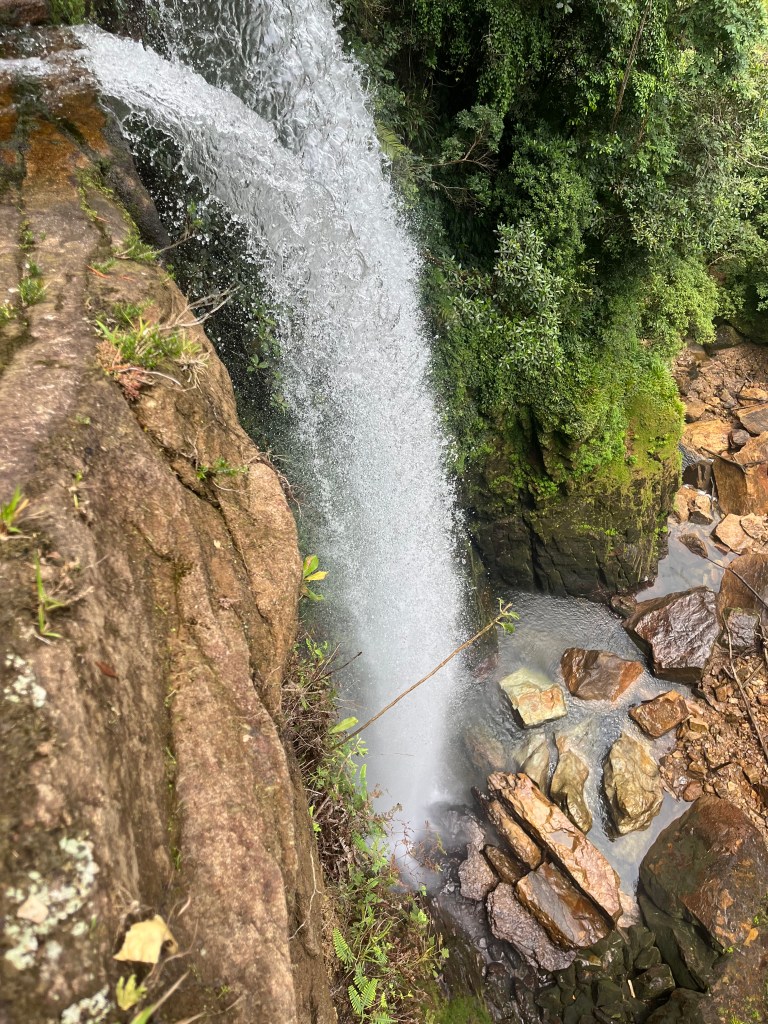
I kept staring at this hypnotising flow for a while. The more I looked, the more I felt that behind this majestic natural artwork there was something comforting – innocent and simple water drops breaking apart and trying to come together again in a new place of unity.
This image stayed in my mind afterwards, as I kept hearing the news of escalating conflict – and the loss of innocent lives – in far too many other countries around the world. Conflict and brutal action often originate from disconnection – from breaking apart from one another, from placing barriers between us and seeing each other as different – while, if we looked more closely, we would realise that we are not.
Like the drops of a waterfall, all we should strive for is returning to a place of peaceful unity once again – a peaceful unity that is not merely that of a village, a population or a country, but a global unity of all humanity and of the entire planet we live on.
I truly hope we do not need to go through an actual fin del mundo to get there.
 Gracias a la vida
Leave a comment