My last week in Cuba was one of the strangest — and most memorable. I had the chance to experience La Habana from yet another perspective, cycling many kilometres a day to reach underserved residential neighbourhoods and offer a little help. I often stopped at a café to recharge, where a sign read “no hay luz pero hay café” (there’s no light but there is coffee) — yes, Cuban people know how to value what is essential. Not only that — Cuba had a number of unexpected experiences in store for me: going to see a ballet at the National Theatre, sharing time and food in the welcoming home of Nivia and Asbel, receiving farewell gifts from the abuelitos, and saying a few other unforgettable goodbyes.
When I returned to La Habana, I realised that circumstances were tougher and more complicated than during my earlier stay in January. Transport was almost impossible to find — colectivos ran less frequently and were nearly always full. On the other hand, electric vehicles — scooters and tricycles — seemed to have multiplied, often offering taxi services for short distances. The prices of food and other products had increased, making them even less affordable for most Cubans.
Each day I encountered extreme poverty in the streets — people repeatedly asking for anything I could give: money, medicines, food. While hospitals and schools were struggling to provide essential services due to power cuts, there were rumours that solar panels had been installed in key locations to keep some services running, though with little transparency. A few boats carrying humanitarian aid — mainly food — arrived from Mexico. It was distributed to a limited number of people (I met a lady who received it), but it was clearly insufficient to meet the enormous needs.
After witnessing the unjust struggle of so many, I could not bring myself to leave without making a more concrete contribution. I volunteered with a Spanish NGO, Hombre Nuevo Tierra Nueva, which provides food, medicines, and social and healthcare support to an underserved neighbourhood of La Habana called El Cerro. I was able to borrow a bicycle from the house dueña and began cycling several kilometres each day to reach those in need. This gave me the opportunity to observe more closely the poor housing and living conditions, the piles of rubbish accumulating in the streets, and the long queues of people waiting — sometimes for hours — to find transport, buy bread at the cheapest store, or withdraw a small amount of cash from the bank.
While volunteering, I could never forget the dozens of people waiting in hope of receiving at least one of their prescribed medicines — often essential for elderly patients to manage chronic conditions or for children to recover from acute illnesses. As first-line treatments were frequently unavailable, doctors had adopted the practice of prescribing second- and third-line alternatives as well (all on the same prescription), in the hope that at least one might be found. Patients or their carers often had to embark on a “medication hunt” — moving from empty pharmacies to NGO distribution points, or even turning to the black market — simply to obtain what they needed.
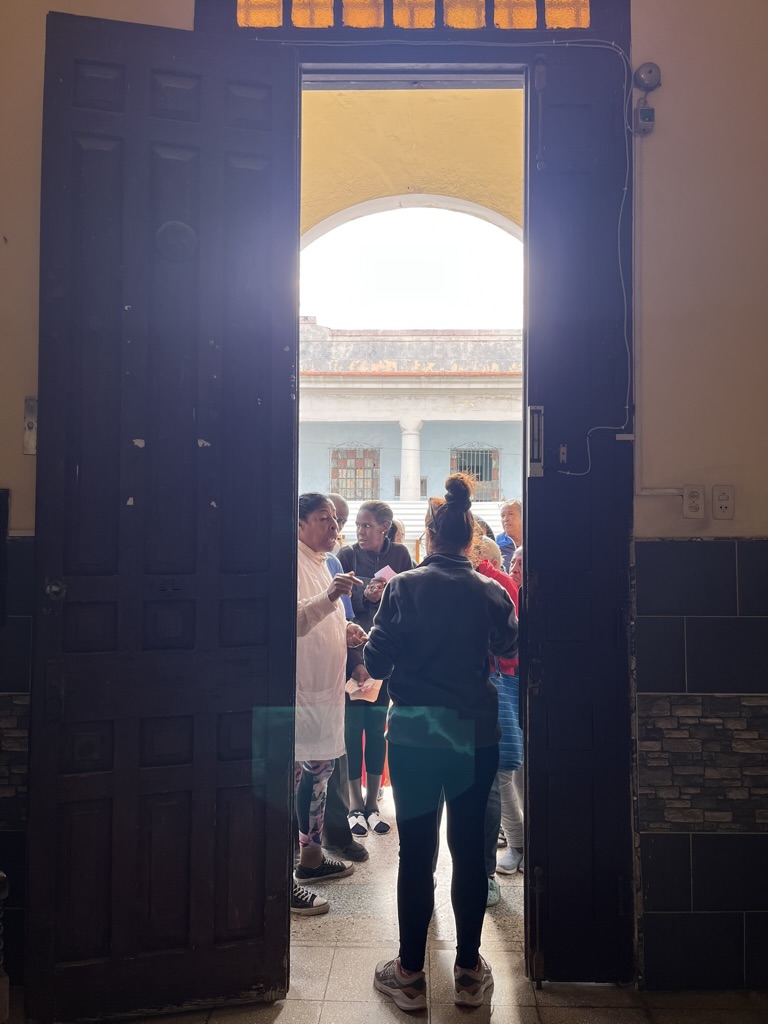
Together with a cohesive team of generous, kind-hearted collaborators and volunteers — Elaivis, Daiami, Eliesier, Bárbara and Yoanka — I helped to prepare and serve meals to a large group of frail and lonely elderly people — the abuelitos — offering not only food but also companionship and small moments of joy. On my first day, I played dominoes with Pascual, Gilberto and Armando — a hilarious trio. I lost every game; the shy Gilberto won most of them; the extroverted Pascual kept hoping for victory and repeated the English words “fine, very well!” after each good move; while the sweet 94-year-old Armando simply enjoyed this escape from his usual loneliness.
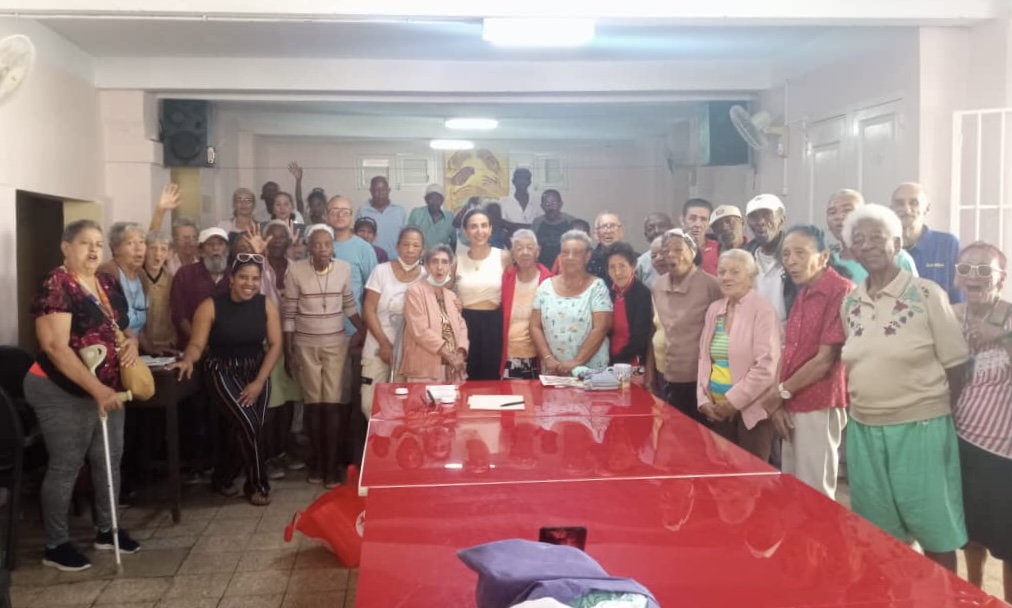
On my last day, I arrived to find the abuelitos waiting for me with a surprise. They sang me a farewell song and gave me handmade gifts — an abstract painting, two potholders, and a photo collage of our shared moments. After we finally managed to take a group photo — not without difficulty — I received what felt like countless hugs, kisses, and words of gratitude. During those days, cycling along hilly roads under the warm Caribbean sun had left me exhausted, and worries about the situation buzzed constantly in my mind. Yet those moments of giving, receiving and sharing were combustible del alma — fuel for the soul — sustaining me day after day.
At the Centro Martin Luther King Jr., I learned about the humanitarian work carried out by the spiritual leaders and volunteers of the Iglesia Bautista Ebenezer de Marianao. They support vulnerable people in the Marianao neighbourhood by providing food, healthcare assistance, house repairs and temporary shelter when necessary. There I met Kim and Stan, two pastors from the United States who fell in love with Cuba and chose to stay, dedicating their hearts, minds and hands to the community.
I also met Wilfredo, a general practitioner who works tirelessly, day and night, to meet the healthcare needs of vulnerable residents. On days when medicines are distributed, more than a hundred people may arrive, and each receives careful medical attention from Wilfredo or his wife, a paediatrician also involved in the project. “I cannot simply hand over the medicine and say goodbye,” Wilfredo told me. “I always feel compelled to understand how a person feels, what they are going through, and how things might be improved.” He spoke about the medical missions he had undertaken across Latin America and Africa, describing how challenging yet meaningful it had been to provide essential care in extreme circumstances. That same level of need is now present in his own neighbourhood. “As doctors, we must never stop talking to our patients,” he said. “Sometimes a few reassuring words can do more than medicine.”
In the final days in La Habana, I had the opportunity to deepen my friendship with Nivia and her husband, Asbel. Asbel is the talented empanada-maker whose home I used to visit every morning in January to buy coconut or guava empanadas. Nivia is his resourceful and supportive wife, well known throughout the neighbourhood, who manages the networking and administration of their small home-based baking business.
I had heard about Asbel’s renowned pizza but had never had the chance to try it. Nivia explained that they had recently stopped making it because the price of imported cheese had become too high. When I heard this, I decided to contribute a little so they could buy cheese and resume their pizza-making — not concealing my hope of tasting a slice myself. As we began talking more, Nivia invited me to their home every day. She would set aside empanadas for me each morning and introduce me to other vegetarian Cuban dishes in the afternoon, including a delicious, earthy chícharo (snow pea) soup. One afternoon, Nivia and Asbel were waiting for me with a freshly made vegetarian pizza, still warm from the oven.
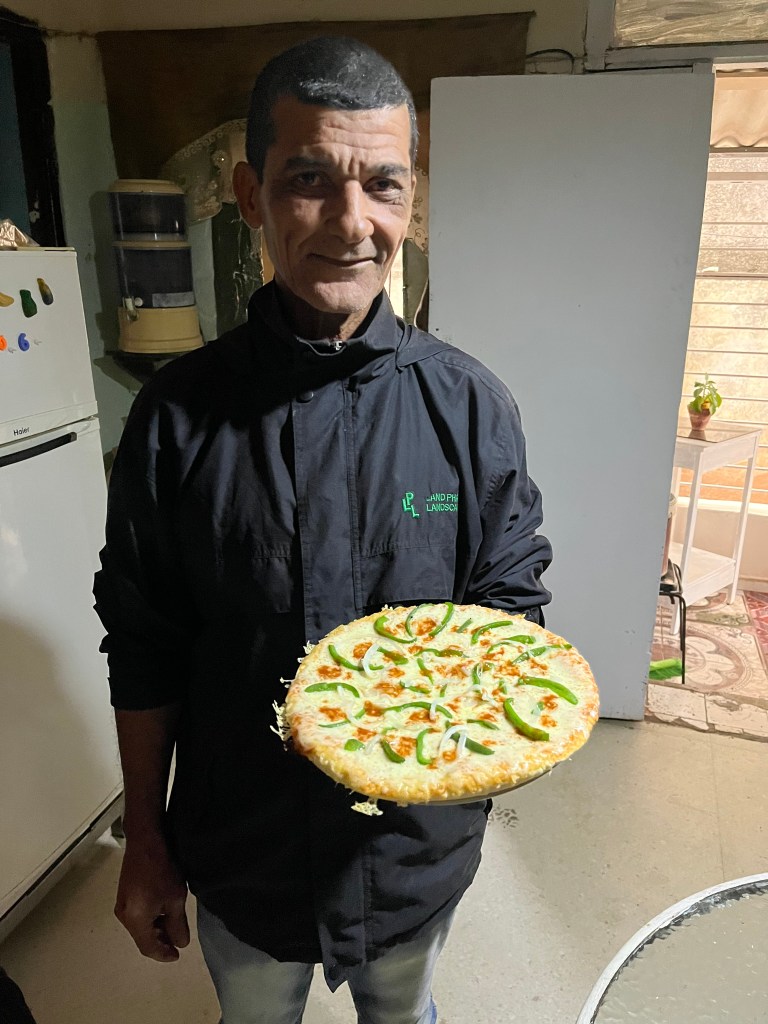
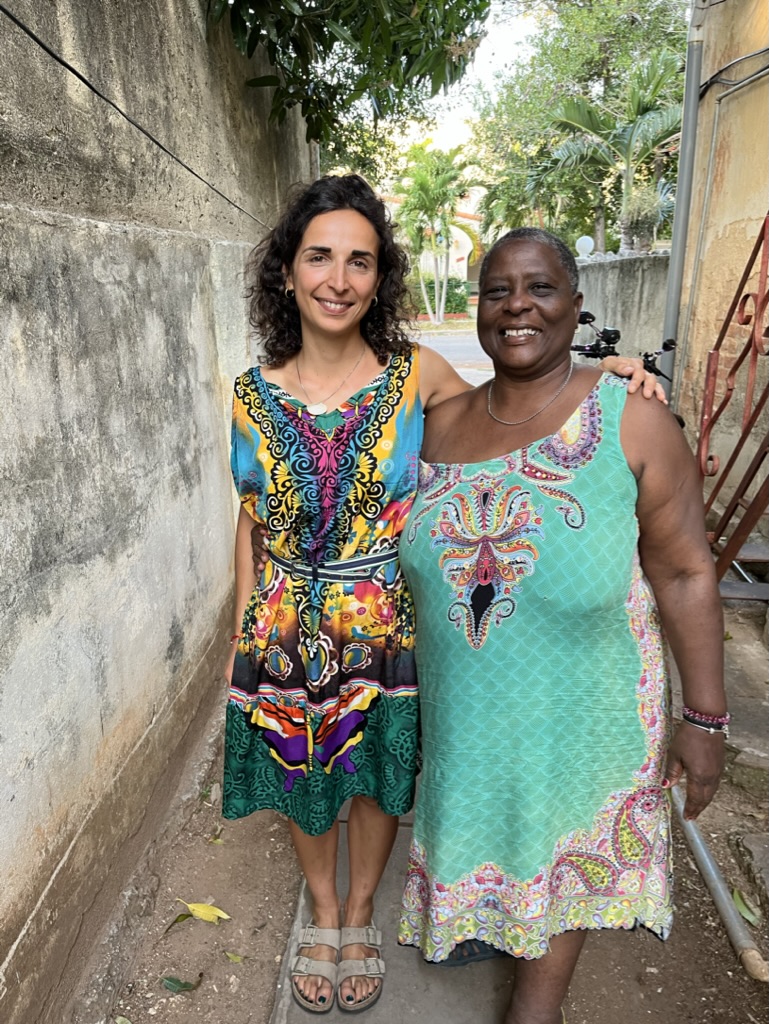
They were extraordinarily kind. Their home, just a few blocks from mine in La Habana, was always open to me, as though I were part of the family. Sometimes I would go simply to spend time there — to exchange a few words and absorb some of Nivia’s remarkable positivity. Hers is the positivity of a luchadora — a strong and resilient woman who works hard, rarely complains, and perseveres through every difficulty. Before I left, Nivia gave me one of her light, multicoloured dresses — one I had admired since the first time I saw her wearing it — as a token of our friendship. Whenever I wear it, I will think of this inspiring Cuban luchadora and try, in my own way, to be a little more like her.
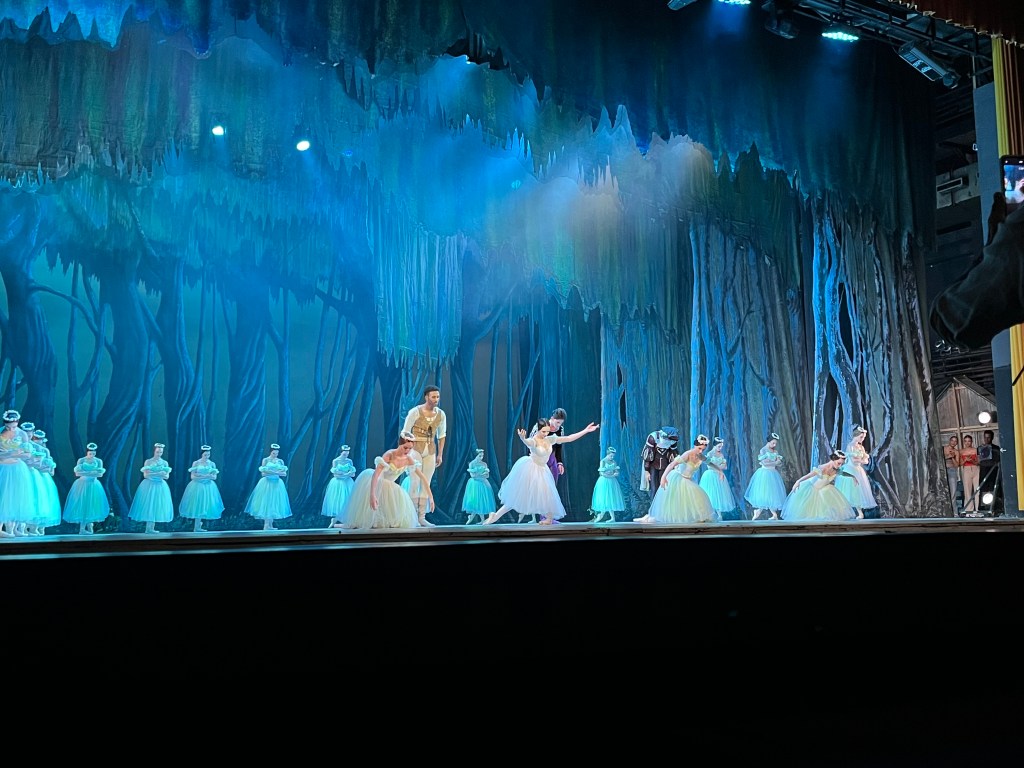
The weekend before my departure, my house dueña Alicia invited me to join her and her friend René to see a ballet at the National Theatre. The invitation came as a welcome surprise. Busy as I had been — running around providing assistance and collecting donations — I had not realised that the artistic scene was still, to some extent, alive. Although several orchestral concerts had been cancelled due to transport difficulties, preventing musicians from attending rehearsals and performances, the theatre had decided to go ahead with two ballet performances. The young dancers had been rehearsing for weeks, and the charming prima ballerina was eager to make her debut in the role of Giselle. There was, however, one adjustment: the orchestra could not perform live, so the ballet was accompanied by a recorded score.
I watched the entire performance from a privileged seat in the front row of the parterre, one of René’s reserved tickets. René is an elegant and sharp 80-year-old who has worked for many years as an art critic, and keeps writing for a bilingual arts magazine published in North America. Observing René “in action”, and learning from his vast knowledge of the ballet world, proved even more memorable than the performance itself. He knew the music and choreography by heart — the version adapted and performed by the renowned Cuban dancer Alicia Alonso. From time to time, carried away by the music, he would hum along softly and gesture with his hands, expressing his emotion. He explained the key movements and compositional details of the choreography to me. After the interval — which he spent conversing with the French ambassador — he suddenly addressed me in flawless French. From then on, we continued commenting on the dancers’ performance, half in French and half in Spanish.
A surprisingly large audience had gathered at the theatre despite the transport difficulties. As we left among the crowd, René struggled slightly to keep his balance in the darkness, so I offered him my arm. René is among those less directly affected by the current crisis; he lives comfortably and is able to continue some of his work in the arts. Speaking with him felt like travelling back to a time when La Habana was one of Latin America’s great cultural and artistic capitals. Yet noticing his physical fragility reminded me once more of the gaps in Cuba’s healthcare system — and of the fact that even someone relatively well-off might struggle to receive adequate care in times of need.
Most of the farewells with my Cuban friends were simple, yet intense and deeply meaningful. Lázara stopped me one morning as I was leaving the house with my bicycle. “I don’t like goodbyes,” she confessed. “So I’d rather hug you now and pretend this isn’t one.” Lázara is one of the wisest and most caring women I have ever met — remarkable even by Cuban standards of generosity. She gives spontaneously and abundantly, without expecting anything in return. I learned that people call her samaritana because of her generous heart. She has become both a friend and a point of reference for me.
In our final moments together, she reminded me of the essential life lesson she had shared with me: coger las cosas suaves — to take things gently. We cannot control everything; we cannot obtain everything immediately. Expecting that only leads to frustration and resentment. Solutions may not always be near at hand, but Lázara is a woman of deep faith. “There is a solution to everything,” she told me many times. We must keep believing that, little by little, things will fall into place. What was not meant to be a farewell became one, as we exchanged emotional words, hugs, and a few tears. Her wisdom, her outlook on life, and her friendship will always remain with me.
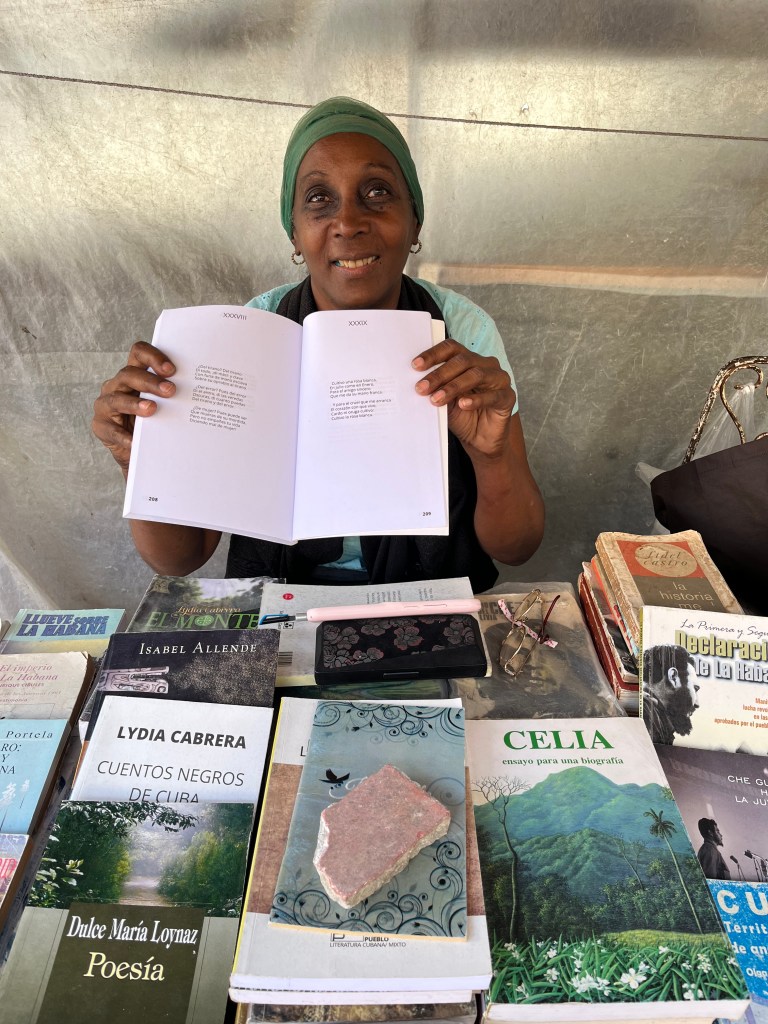
And back to José Martí — I cannot close this Cuban chapter without mentioning him once more. On my final day in Habana Vieja, I spoke again with Gisela, the woman who had first introduced me to the renowned poet and national hero at the beginning of my stay. I asked her to recite once more the poem I had heard before but partly forgotten: Cultivo una rosa blanca. The poem carries one of the purest and most admirable messages of all: we should strive to cultivate a white rose for the sincere friend who helps us, and also for the enemy who harms us. The rosa blanca symbolises pure love, humble service and forgiveness — foundations for peace and solidarity among humankind. If we cultivated a few more white roses in this world, things might be very different.
I remain confident that Cubans will endure these harsh circumstances, that things will once again fall into place — thanks to their unique capacity for solidarity, and to the support they deserve from the rest of the world.
I left my home in La Habana in the early hours of a dark morning. The streets were unlit. No cars passed, except for the yellow taxi in which I sat. Egidio drove calmly, exchanging a few kind words with me about my Cuban experience — an experience quite different from what I had initially expected. Over the course of two months, I witnessed conditions worsen, while my emotional involvement deepened. The darkness, the emptiness, the crisis — all struck both Cuba and me more forcefully than I had anticipated. Yet they also made the experience more meaningful, more deeply felt. They helped me rediscover and appreciate what is essential.
“The essential is invisible to the eyes.” One does not need electric light to perceive it. It can be found even during a power cut — perhaps even more clearly during one. But preferrably under the Caribbean sun.
I bid farewell to Cuba for now, yet I continue to carry Cuba — and the Cuban people — invisibly within my heart.
I am still collecting donations for the Cuban people who are going through severe hardships due to the tightened U.S. embargo — extreme poverty, lack of electricity and fuel, and limited access to food and essential medicines. I am raising funds for the two organisations mentioned in this blog post, which are doing their very best to meet the needs of vulnerable people in La Habana and other locations across the island. If you’d like to contribute, you can donate via this fundraising page: https://www.paypal.com/pools/c/9n0304rSyV
Thank you to all who have already donated — your contribution matters. Keep caring about the Cuban people, keep caring about the world.
 Gracias a la vida
Leave a comment