As I stared out of the car window, a countless line of colossal luxury hotels rolled past before my eyes, towering along the coastline, while the sandy beach and gentle Caribbean waves remained hidden behind them. I was travelling from Matanzas to Trinidad in a colectivo, which had to drive along the kilometres of Varadero beach to drop a couple of tourists at one of those hotels. I spent the otherwise monotonous ride talking to Milio, a talkative and amusing taxi driver who – with a constant smile on his face, yet a deeper sadness beneath – confessed his worries about the current situation and the uncertain outlook for the people of the island. He was keen to explain, too, that what I was seeing outside the car window was anything but the real Cuba. ‘Varadero no es Cuba’, he concluded.
Milio’s words perfectly matched my own impressions of the place. While staying in Matanzas, I had one day decided to visit nearby Varadero beach to see with my own eyes the disparities that exist there compared with the real Cuba. Varadero is a 20-kilometre stretch of sandy beach, home to the largest share of purely beach tourism in Cuba. It is filled with multi-star hotels and resorts, polished and impeccable, whose prices are by far higher than those in the rest of the country and inaccessible to most Cubans. Varadero is not Cuba.
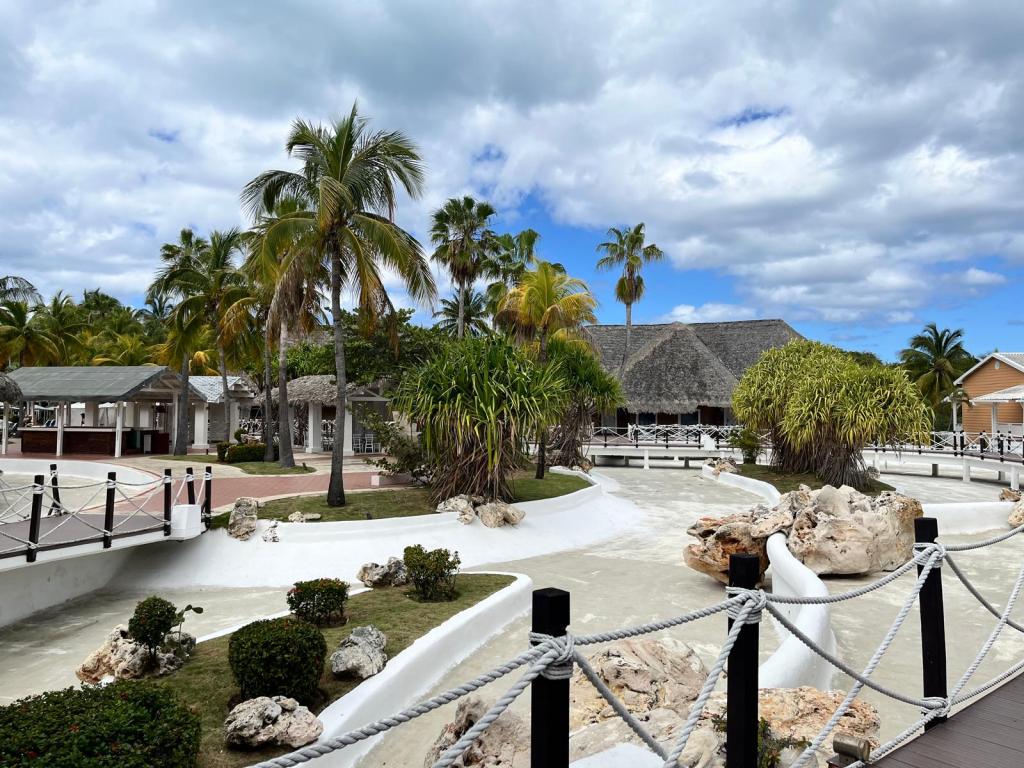
I could have taken a taxi to get there, but – following my stubborn intention of doing things the way Cubans would – I decided to opt for the guagua (the Cuban term for a large bus). I had little hope, but no other plans for the day, so I decided to give it a try. When I arrived at what I assumed was the guagua stop, I found dozens of people waiting, scrutinising the horizon of the eerily empty road, pushing one another to squeeze into one of the few colectivos that showed up – not a good sign.
While waiting, I met Christián, a friendly and talkative fifty-year-old who works as a hotel manager at one of the most luxurious hotels in Varadero. Christián trained as a microbiologist and has a range of rather unique skills (including bonsai cultivation and repurposing old objects into works of art), but after the difficult period of the pandemic, the only job he could find was in tourism. ‘My boss doesn’t set a start time for us any more, as transport has become so scarce. My work begins when I get there – if I get there – and doesn’t finish until the following day, as there may be no way at all to get back in the evening.’ Fortunately, Christián works in a hotel and is given a room to rest in at night when circumstances prevent him from leaving. A room he would otherwise never be able to afford. ‘One night in the hotel where I work costs more than my annual salary,’ he admitted.
As I had no idea where to start exploring on the long Varadero coastline, Christián advised me to get off the guagua at the town of Varadero, before reaching the area dominated by the colossal luxury hotels. A few things stood out from the very first moment: the place was quiet and clean, with no rubbish piled up in the streets; tourist attractions were clearly signposted; the internet connection worked perfectly; electricity was constant and reliable. While the rest of the country endures a worsening energy crisis, Varadero seems to belong to a different planet. Varadero no es Cuba.
There is only one thing that remains constant in Varadero too: Cuban people and their kindness. When I decided to head back to Matanzas, finding transport proved a struggle. I spent almost an hour at the roadside, hoping for a guagua to appear or for a colectivo to stop and take me at least part of the way, but only a few private cars passed by. Eventually, Oscar stopped on his scooter and, with the now familiar and sincere Cuban kindness, helped me find my way. Thanks to him – who drove me safely to the other side of Varadero and directed me to a better-served guagua stop – I was able to catch a bus back to Matanzas.
As I boarded the guagua, full of Cubans returning from their workday at the beach facilities, Victor – an extroverted bus driver, perhaps a little eccentric – was surprised to spot me as the only non-Cuban on board. Most Varadero tourists would never travel on overcrowded and rather uncomfortable guaguas. In another act of kindness, he saved a seat for me at the front of the bus. When we stopped at another hotel to pick up a few more Cuban workers, he offered me a sip of his coffee – the other kind of fuel he needs, as a driver, to keep going. With a thick Cuban accent, he shared enthusiastic shouts and remarks about the baseball match that had just ended: the Matanceros had beaten the Habaneros this time. For a moment, everything felt almost normal. On that guagua, filled with Cuban warmth and friendliness, as I gazed out at the beautiful coastline, the crystalline sea and the lush nature lining the nearly empty road, listening to people cheering about the baseball results, all worries could – for a moment – be forgotten, postponed to some indefinite tomorrow.
But it did not take long to return to reality, aware of the increasingly worrying news and the situation I was experiencing all around me. As the island is running out of fuel, the government introduced more severe cuts, reducing already struggling essential services – such as healthcare, education and transport – to an even lower minimum. The struggle for the Cuban people is real and pressing. For many, stopping and waiting has become the only option – for those who cannot reach work, for those who cannot work because services have been suspended, for those who rely on tourism to survive (while tourists are disappering), for those who are ill but cannot be treated, as hospitals too are running out of fuel. ‘In a few days I won’t be able to work any more. I’ll stay at home, buy the bare essentials to feed myself and my family, and pray for the best. It’ll be like hibernating.’ That is what Milio said, eventually laying bare all his concerns, this time without a smile on his face.
On a much smaller scale for me (as I remain the privileged foreigner), the horizon has seemed full of uncertainty – uncertainty about whether I should continue my travels in Cuba, whether I would find transport to get around, whether my flight scheduled for next week would still depart, as fuel for international flights has also been cut. Amid all these uncertainties, I chose to keep a little faith and stay – stay in Cuba, stay with the Cubans. I chose to remain a passionate and patient explorer, giving this island and its people what little I can while I am here. An island that, however, deserves so much more.
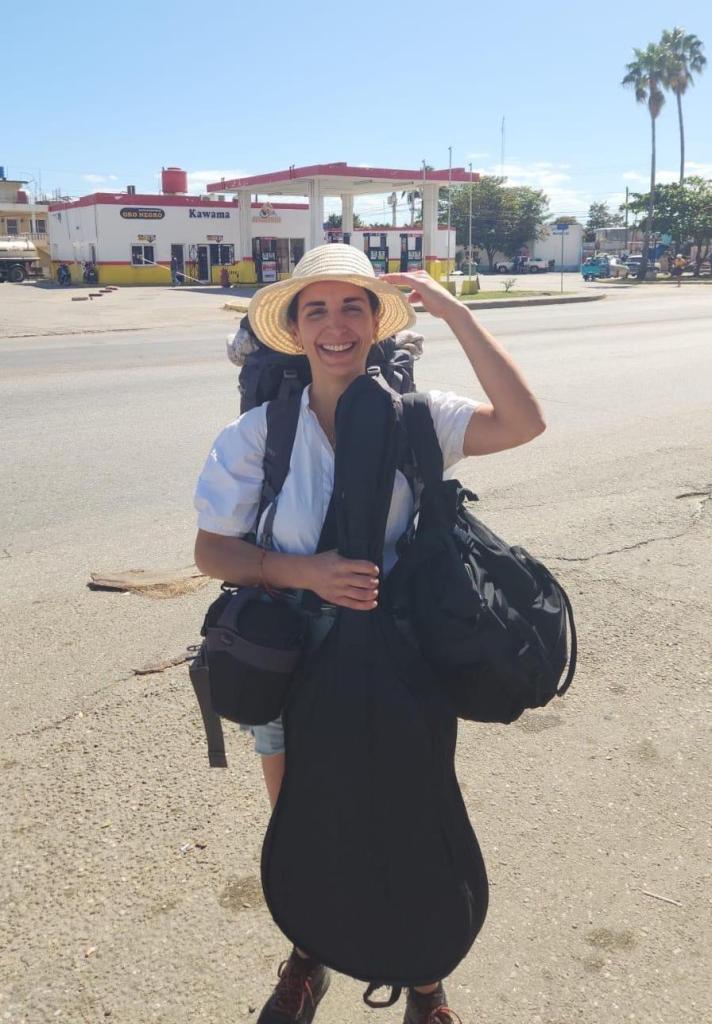
After many cancellations and refused requests, I secured a place in a colectivo heading to Trinidad. Milio dropped me at a gas station in the middle of nowhere, reassuring me that the next driver would come and pick me up soon. ‘If I had more fuel, I would drive you all the way to Trinidad myself,’ he kindly added before leaving. I never doubted – not even for a moment – that the next driver would come. Because, even though circumstances are harsher and more uncertain for everyone, I knew the Cubans would not let me down.
Throughout this long journey, in many different situations, I have never been let down by the Cuban people. On the contrary, they have always shown unconditional hospitality and care. And so, with the same unconditional faith in them, I set the next steps of my journey, ready to return to the real Cuba.

 Gracias a la vida
Leave a comment