When I left for Cuba, I never imagined that I would have to wear all the extra layers I had brought with me — two long-sleeved shirts, a jumper, a scarf and a warm jacket — all at once. It has been exceptionally cold, even in Cuba. Temperatures have been the lowest people can remember, dropping below 10 degrees across the island. In the countryside of Viñales, the house dueña, Marta, repeatedly reminded me to put on my coat — “Abrígate” — before I went out for a walk or a bike ride, just like a caring mother would. She prepared generous cups of hot coffee for me in the morning and delicious vegetable soups at night. She did all this, and more, while shivering in the unusual cold, juggling unreliable power supplies to keep essential services running in the house, and spending sleepless nights worrying about her family’s future.
I can hardly describe the gratitude I felt for the many ways she — and other people I met in Viñales — took care of me while I was there. But who is taking care of the Cuban people?
Marta is a kind-hearted and courageous woman who has endured many hardships in her life, especially in recent years. Her husband passed away a couple of years ago from a sudden liver illness, while still in his early sixties. Since then, she has been responsible for both the household and the guesthouse, taking care of visitors with a little help from her son and daughter-in-law.
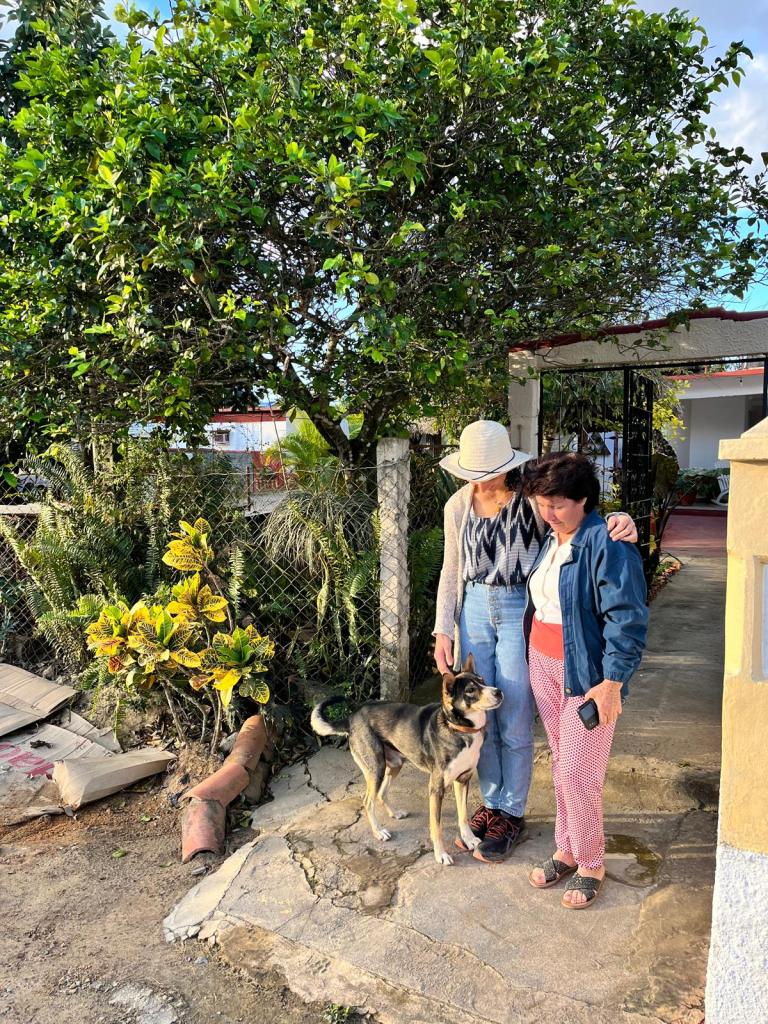
Marta is the mastermind behind the house’s energy management. She knows which lights to use, and which not to, in order to save electricity and use it at the right moments. She keeps track of all power cuts and promptly switches to solar power whenever needed — an energy source that would be hugely beneficial across Cuba, but which very few people can afford. Marta is also the cornerstone of her family: a steady source of support for her sons, nephew, brother, and more distant relatives.
Marta’s elder son, Alejandro, moved to Florida a few years ago in search of job opportunities that would allow him to support his wife and two daughters, who still live in Viñales and have been unable to obtain visas to join him there. He works day and night as a taxi driver and still manages to send only a small amount of money back home. He has been away for several years, struggling with loneliness and depression — especially when his father died and he was unable to return to Cuba due to his unstable migration status.
Marta’s younger son, Alai, is also preparing his documents to move to Spain as soon as his wife, Amanda, completes her studies. Their marriage, which took place earlier than they had ever planned, was intended to maximise their chances of emigrating together. Alai works as a waiter at night while helping Marta with the housekeeping during the day. Amanda, in her final year of medical school, travels daily to the hospital for her clinical rotations — including a 24-hour shift once a week — and spends her supposed spare evenings preparing dinner for the guests, while still finding time to study for her exams.
“A doctor in Cuba works endlessly and earns nothing,” Amanda told me. “Most doctors end up taking second jobs in restaurants and cafés just to survive.” Not only are the wages miserable, but frustration and limitation are part of everyday life. “Cuban doctors always need to think of a plan B or C, because plan A is never feasible due to the lack of instruments and medicines. Often even the most basic medication is unavailable.” For a long time, medical education in Cuba was thorough and rigorous; young doctors received solid training thanks to extensive clinical exposure from early on. However, this is now changing: standard clinical practice has become increasingly difficult, many young doctors are leaving the country, and experienced teachers on the wards are becoming scarce.
I met Nedel on a chilly morning when he picked me up on his electric scooter at 5 a.m. for a sunrise hike to the top of a mogote (a limestone hill). Nedel is in his fifties and works almost non-stop with tourists, renting out part of his home and guiding visitors around Viñales.
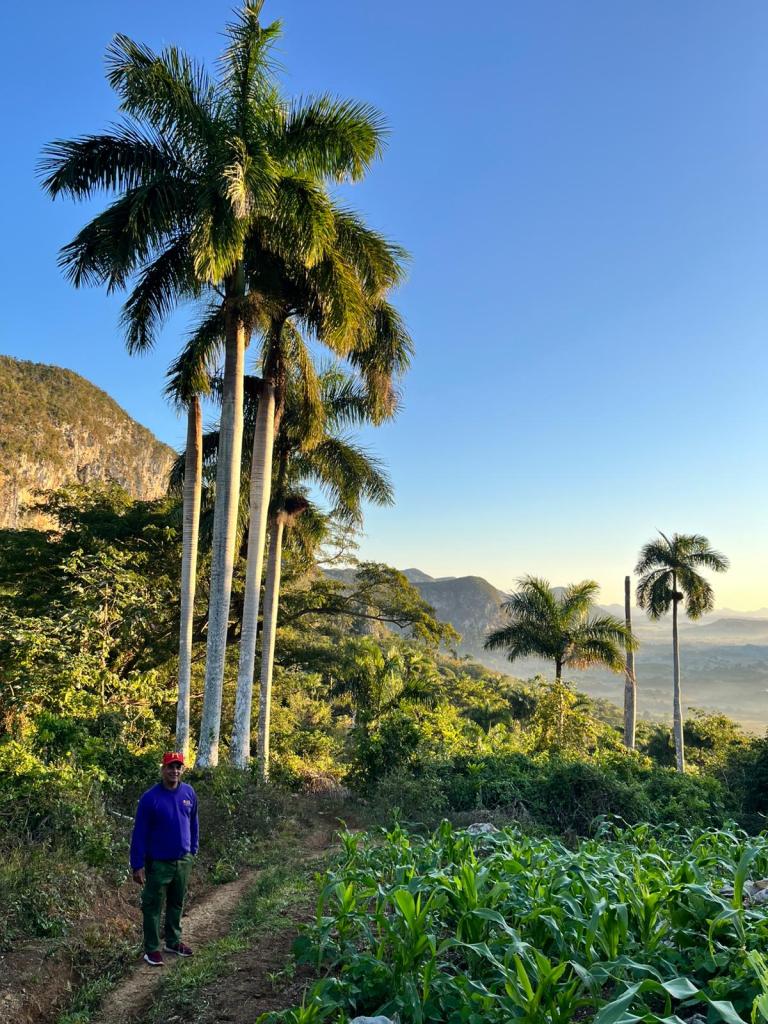
“My fourteen-year-old niece had appendicitis a few weeks ago,” Nedel told me, “but no ambulance was authorised to collect her. Her parents had to hire a private car — one with enough space for her to lie down while in severe pain — which cost them 40 dollars.” This is an enormous sum in a country where a state salary may range from 10 to 20 dollars a month, and a state pension may be no more than 5 dollars. Most surgical procedures can only be performed if patients provide the hospital with all the necessary equipment — sterile gloves, surgical instruments, prophylactic antibiotics and anaesthetics — which they are forced to purchase on the black market at unfairly high prices.
The situation is becoming increasingly unstable. That is why Nedel, too, has decided to leave the country. He recently signed a contract to work on a chicken farm in Montenegro and is now waiting for his visa. His sons, both engineering students at university, will follow shortly after. Engineering is another field that offers little economic security in Cuba, and they see no future for themselves on the island. They will start working in Montenegro and try to build a life there. The adaptation will be hard — the culture and the language unfamiliar — but at least they will have the chance to work towards a more secure future, together as a family.
Carlos guided me through the botanical garden of Viñales, a fascinating place where human care and natural wildness meet, allowing many beautiful local and imported plants to thrive. Carlos is a sharp and knowledgeable young man who speaks five foreign languages and possesses an equally impressive understanding of plants and trees. As we compared our language skills, he remarked, “You speak several languages because you’ve had the chance to travel a lot. I speak five languages, but I have never been able to leave the country.” For Cubans, travelling abroad without an official reason — such as work or study — is almost impossible. A holiday abroad, even if it were affordable (which for most it is not), is rarely authorised in the first place.
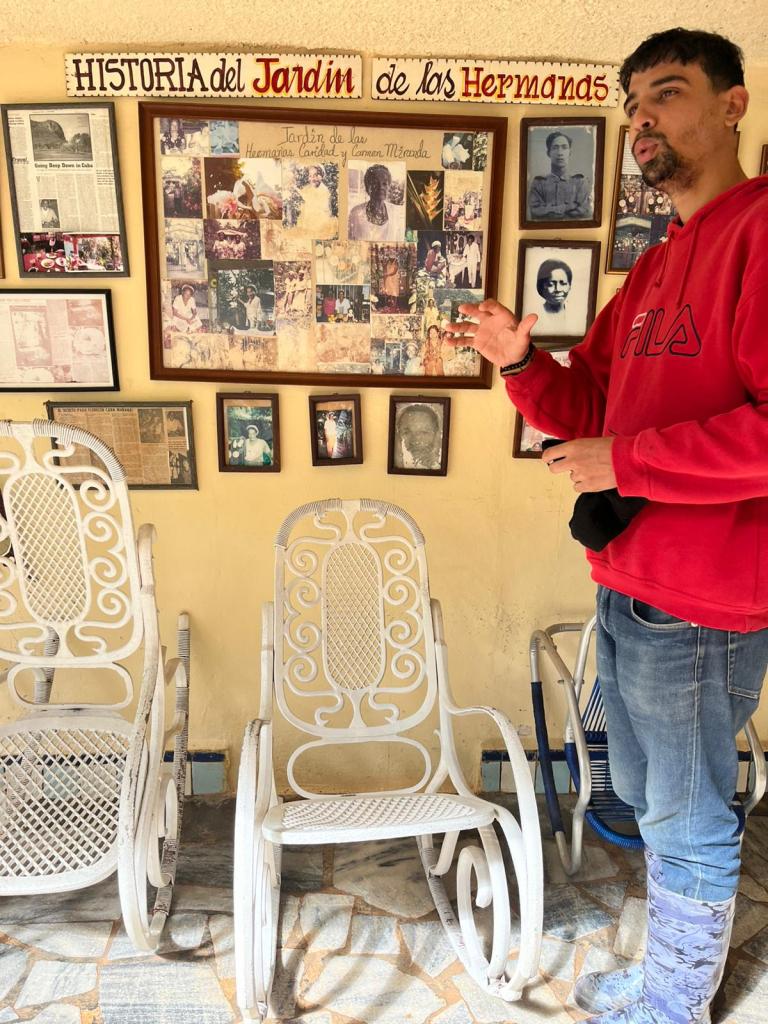
Talented and eager for opportunities, many young people are now searching for official pathways to emigrate. As increasing numbers of younger generations leave, many sectors — particularly education and healthcare — are facing severe workforce shortages, further destabilising the country. I wondered why Carlos had chosen to stay, but I did not dare to ask.
After a long morning of cycling through the windy countryside, Pedrito spotted me by the roadside, visibly tired, and — without hesitation — invited me into his family home for coffee. To my surprise, I was welcomed by a large, loving family: Nancy, Pedro Sr., Pedrito (or Pedro Jr.), Idara, Anailys, and her two sons, Darío and Dairón. Pedro, a warm and energetic 78-year-old man, proudly explained how they daily prepare delicious fresh coffee from raw beans collected in their finca — first roasting them, then grinding them with an old grinder that had belonged to his great-grandparents. His wife Nancy, a kind-hearted and sweet woman, showed me her flourishing garden and the meal she was cooking — rice and beans — on coal-fuelled stoves outside the house, as the indoor kitchen was often unusable due to power cuts.
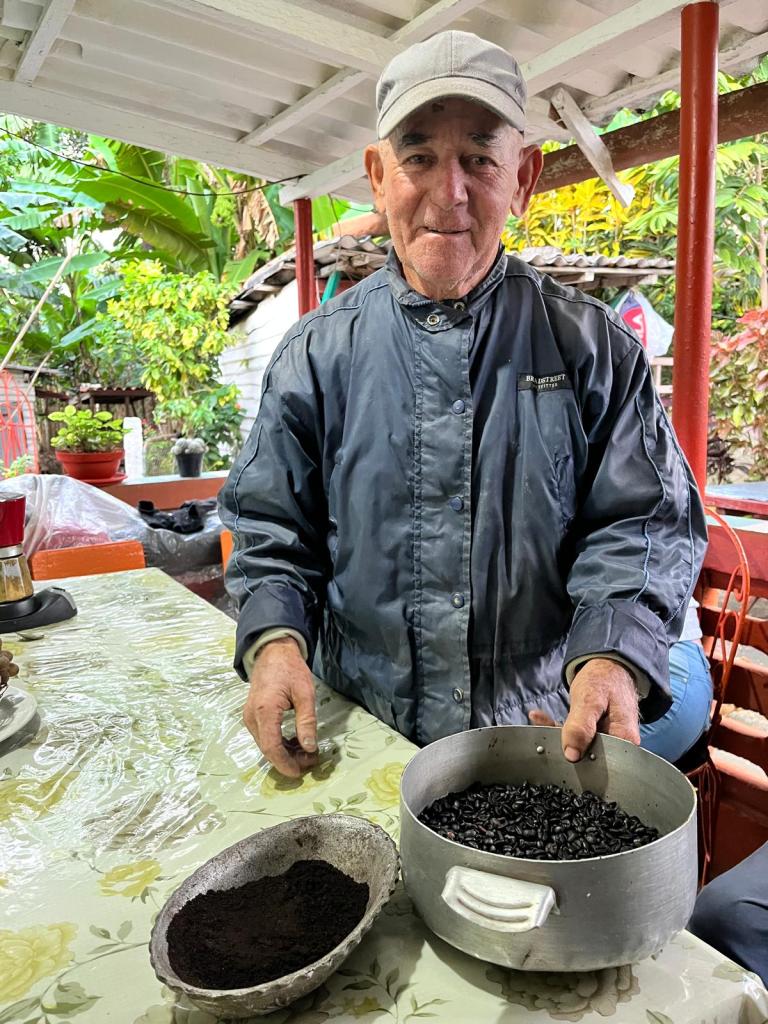
While we were talking, the electricity suddenly came back on, and — to my surprise — everyone quickly left the room. I later realised they had rushed to charge their phones and turn on some basic home equipment, as power was finally available. Anailys, a physiotherapist and mother of two, told me she often wakes several times during the night to check whether electricity has returned — sometimes only available for a couple of hours at night — so that she can do her laundry.
Every time I visited Nancy and Pedro’s family, they welcomed me with genuine care and affection, despite all the hardships they face. They gave me bananas and guavas from their garden and ground coffee for me to take home as a memory of my time in Viñales. They taught me the word “guapear”, which means to endure — something they, and so many other Cubans, continue to do every single day with courage and resilience.
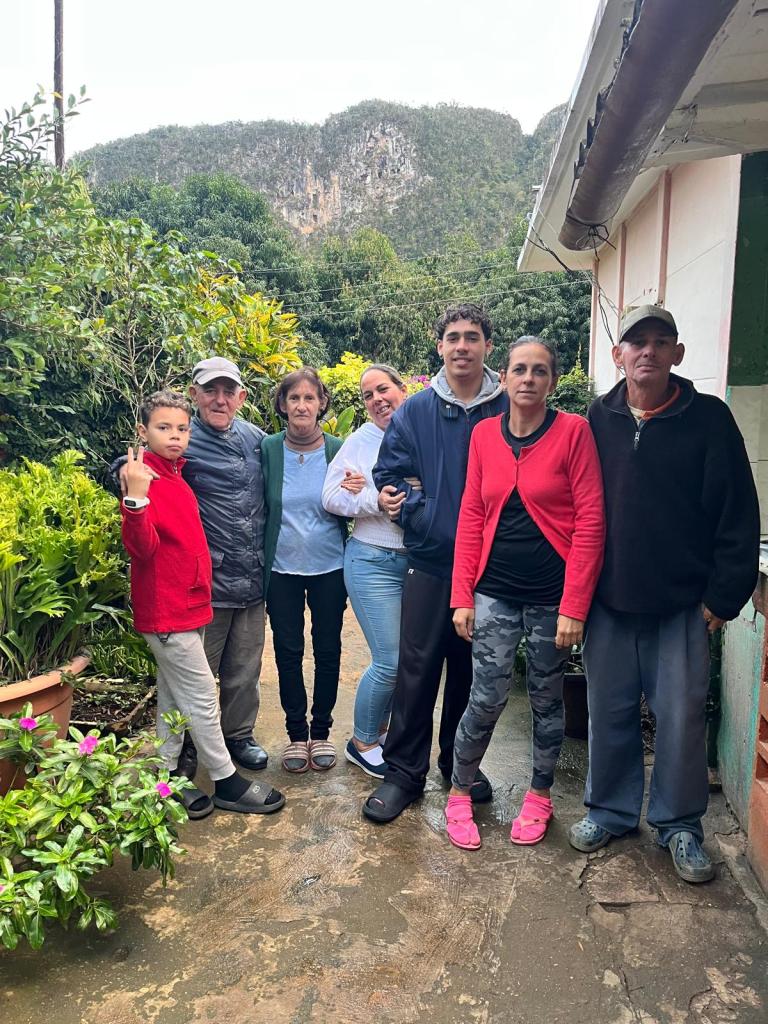
Their gestures, like Marta’s, felt to me like profound acts of care. They awakened in me a greater hope — the hope that everyone struggling in Cuba might one day feel a coat placed over their shoulders: a coat of shelter, security and support. A coat that could guarantee, at the very least, access to basic necessities and services — which are instead slowly crumbling. A coat that might ease life a little, remove one worry from the list, and remind them that someone, somewhere, truly cares.
Abrígate, Cuba.
 Gracias a la vida
Leave a comment