The word candela — literally meaning candle — is one I get to hear very often in informal Cuban conversations, which initially caused quite a bit of confusion in my mind, as the word can take on different meanings depending on the expression. Exclaiming Candela! conveys disbelief, usually in very negative situations. I have heard it frequently over the past few days in connection with the increasingly long blackouts affecting La Habana, sometimes lasting more than 20 hours a day. I could not help noticing the tragic irony of using a word that refers to something full of light to describe the — largely uncontrollable — loss of it.
This happened to Asbel and his wife when they woke up at 4 a.m. to prepare empanada dough, only to find that the lights were not working. Candela! They still managed to accomplish the Herculean task, illuminating the kitchen table with the torches on their phones. It happened to Marlon too, when he, very excited about inaugurating his vinyl exhibition in the Vedado neighbourhood, realised that there was no light to appreciate the carefully selected and arranged records. Candela! People still showed up, examining the vinyls hanging on the walls as best they could, imagining their colours and brilliance fading into the dark surroundings, while sipping a little rum to stimulate their imagination.
It also happened to me once at a beauty salon when, in the middle of a waxing session, all the lights suddenly went out. Candela! Thankfully, the portable generator had been sufficiently charged during the couple of hours of electricity available that day, and the beautician was able to turn on the waxing machine, a small portable lamp, and finish the job. It happened several times when I wandered from café to café in search of a coffee, only to find there was no way. Candela! The coffee machine was not working due to the lack of power. Or when I tried to go to the cinema, but the assistant kept everyone waiting outside for far too long. Candela! The film was cancelled because of the unexpected power cut.
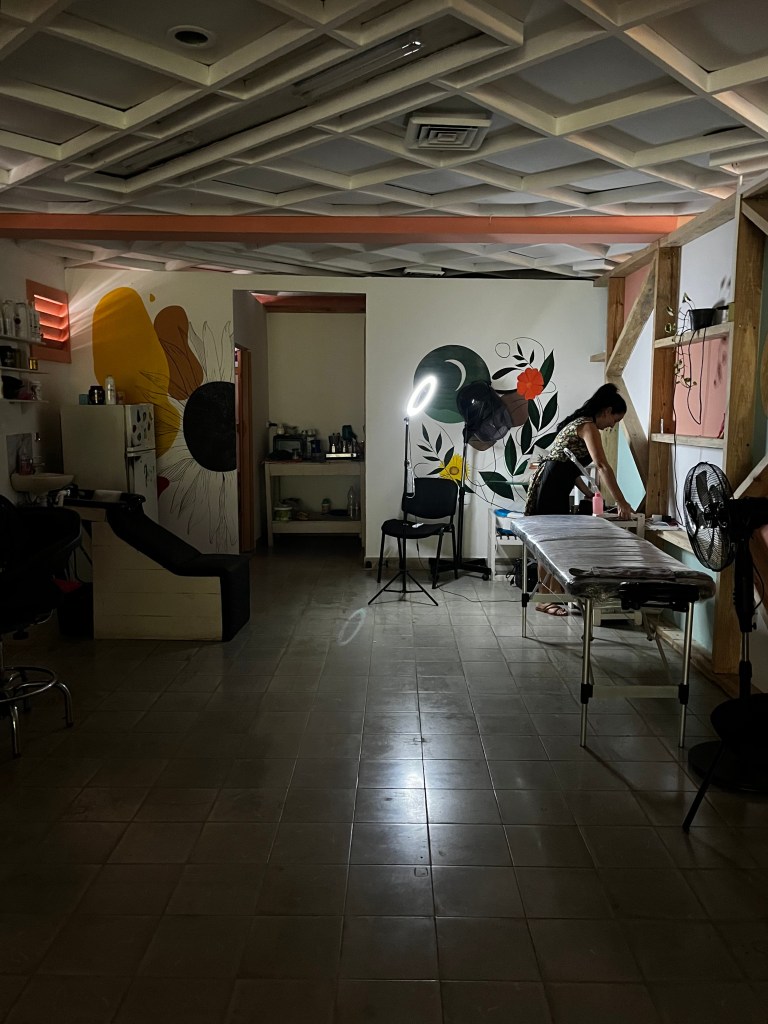
Another common use of the word candela is in the expression ‘estar en candela‘. A situation is ‘en candela’ when it is tense or complicated. A person is ‘en candela‘ when they are not feeling well or are going through difficult circumstances. A person can also be candela, which takes on different meanings depending on the context: a cheeky child, a shameless woman, or a fierce man can all be described as candela. But enough about the negative side. While most uses of candela do carry a negative connotation, if I may allow myself a plot twist, I would like to focus on a more positive interpretation of this word.
I have come across the word candela in several Cuban songs, where it takes centre stage. One famous example is El cuarto de Tula, famously interpreted and recorded by the Buena Vista Social Club, which tells the story of Tula’s room catching fire (‘le cogió candela’ — another, more literal use of the word) after she fell asleep with her candle still lit. Another playful song, entitled Candela, was composed by the troubadour Faustino Oramas and also performed by the Buena Vista Social Club. It endlessly repeats the phrase “Ay, candela, candela, candela, me quemo aé”, alternating it with vocal and instrumental improvisations. In this song, the singer’s confession of being burned by fire refers to the fiery passion and intensity associated with Cuban music and dance.
I would like to embrace this understanding of candela — as passion and awe for inspiring things such as music and art — which closely reflects my feelings over the past few days in La Habana. There have been countless awe-inspiring experiences, far too many to summarise in a single blog post. I will therefore mention just a few memories that I believe will remain very close to my heart after I leave this mystical city.
My guitar teacher, Adrian, is a brilliant musician with a resourceful spirit and an exceptionally kind and funny personality. Let me add this: Adrian has eight jobs, including playing both bass and guitar, teaching children and adults, singing in a couple of choirs, and even tuning pianos. In addition to guiding me through my first steps in Cuban-style guitar and singing, he helped me understand many aspects of how things work here in La Habana. He even managed to fix my guitar using pliers and screwdrivers when one of the tuning pegs broke and had to be replaced. I suppose I could say that he is candela in yet another sense — he is ingenious and bright.
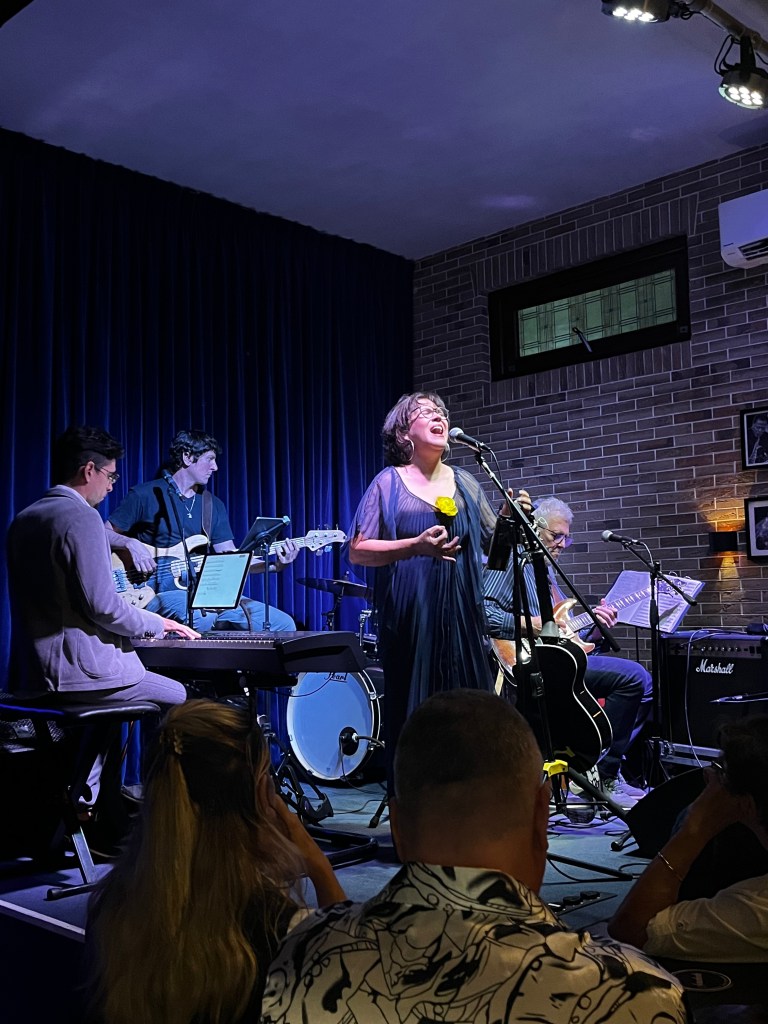
Thanks to Adrian, I attended a couple of wonderful concerts in which he performed. One was a concert by Yvette Cepeda and her band, with Adrian on bass. Yvette, the vocalist, has a warm, expressive voice and a charming personality. With incredible energy throughout the concert, she performed many beautiful songs, including La maza, written by the Cuban songwriter Silvio Rodríguez. The refrain —“¿Qué cosa fuera la maza sin cantera?“, literally “What would the sledgehammer be without a quarry?” — is a metaphor for our lives. We cannot, and should not, live without commitment: without striving towards important goals and upholding our values and ideals, both individually and as a society. La maza highlights the importance of finding the right path in life, a path full of meaning.
At another remarkable concert I attended, Guido López-Gavilán — one of the most prominent contemporary Cuban music directors — brought together a chamber orchestra (Orquesta de Cámara de Música Eterna) and the Cuban National Choir (Coro Nacional de Cuba), in which Adrian also sang. The programme ranged from classical music to more popular Cuban repertoire, all rearranged and brilliantly performed. The concert featured fascinating interweavings of string instruments — played both traditionally and in more creative, percussive ways — alongside the voices of many young, talented musicians.
Finally, I read a book about the short yet intense and inspiring life of José María Heredia (1803–1839), considered by many to be the first poetic voice of Latin American Romanticism. From a young age, Heredia wrote profound poetry filled with emotion and subjectivity, and he was also a committed writer who stood for — and gave voice to — his political and ethical ideals: justice, Cuban independence, equality and the abolition of slavery. These convictions led to his exile from Cuba in his twenties. Although he spent only a few years on the island, he deeply loved what he believed to be his homeland and place of belonging. After exile deprived him of his source of inspiration, he finally regained it when confronted with the spectacular natural wonder of Niagara Falls in North America. That encounter became his candela — the spark of inspiration — for composing his famous poem Oda al Niágara.
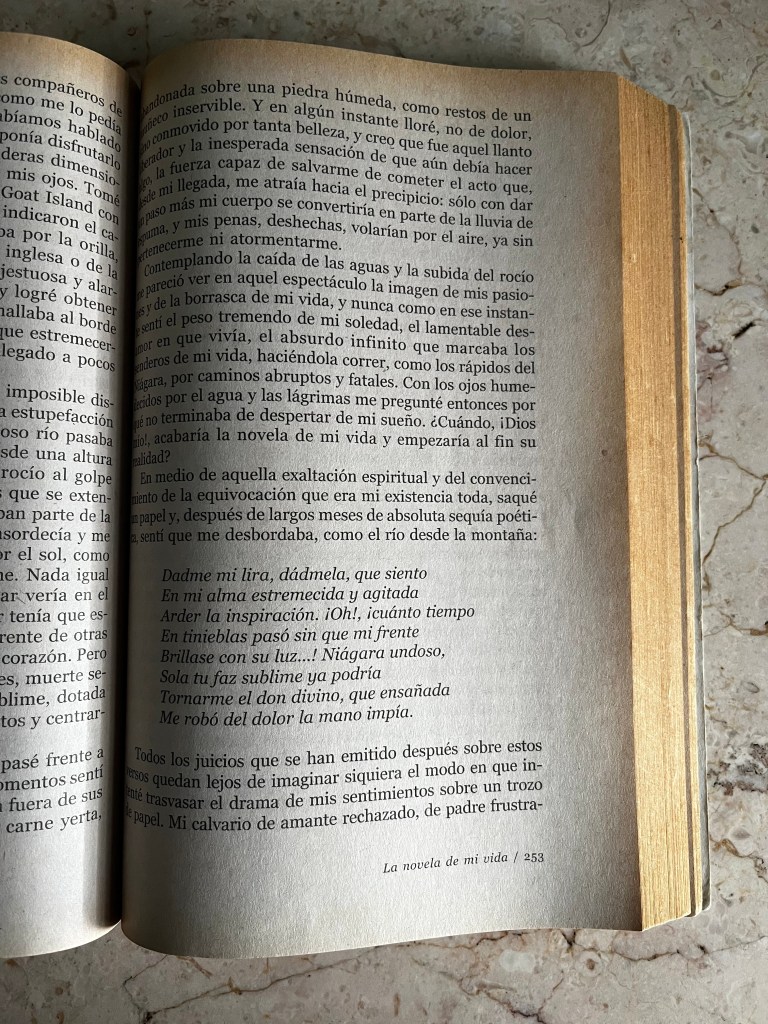
The Niagara experience was not only awe-inspiring for Heredia, but also transported his mind and heart back to his most cherished memories — the beauty and passion he had experienced in Cuba. That is how I would like to remember the emblematic word candela, and this Habanera part of my life: as a fire that inspires, fills our lives, and leads our hearts to where they truly belong.
 Gracias a la vida
Leave a comment