This is the chronicle of how I managed to get through passport control only thanks to the lady at the yellow tourist welcome booth, upon my arrival in Cuba. This is also the chronicle of how I spent an entire day trying (and not succeeding) to exchange money in La Habana.
I landed in Cuba on January 1st around 5:30 pm. It had been a long flight on an old aircraft of the Iberia airline, which seemed to have been chosen on purpose to get us in the ‘retro’ Cuban mood. The aeroplane was only partly full, and I had the unusual privilege of having a little more space than usual, as the seat next to mine was empty. Between stretches of sleep and leafing through pages of my books (among which a new guidebook of La Habana for women), I was pleasantly surprised when the flight assistant handed me a Magnum ‘cookies and cream’ ice cream as a snack halfway through the flight (I had eaten my farewell ice cream one day earlier, in Florence, thinking that the next one would not be so soon).
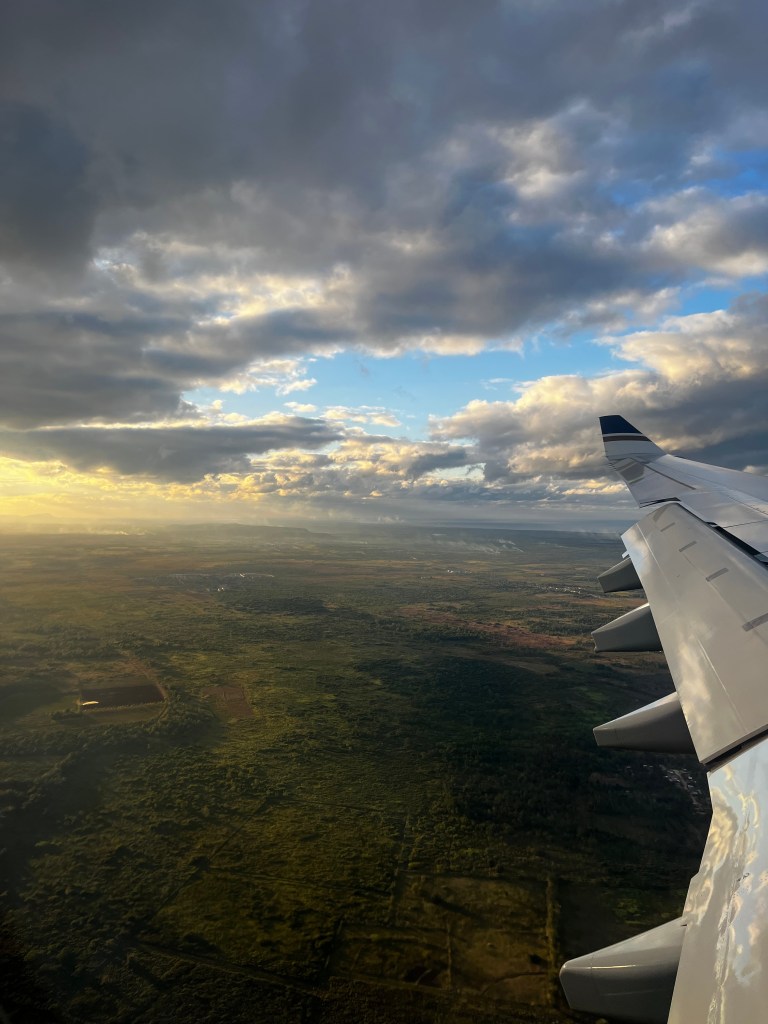
At around 5 pm, landing time, Cuba started to appear outside the windowpane as we descended through the layer of clouds. The island from above looked flat, green, with only few constructions and roads. The sun, going down, spread its golden light on the island making it gleamy and picturesque to watch. I was thrilled and eager to get to know it.
The small José Martí airport of La Habana was far from hectic; only a couple of aeroplanes were parked next to the gates, and only few people were coming into the arrival halls (Iberia being the largest flight of that afternoon). There is one thing I immediately noticed. The Cuban airport employees received all tourists and foreign people with utmost care, greeting each and one of us with ‘Felicitaciones’ for the New Year and a warm ‘Bienvenidos, bienvenidas’ — with a sparkle of hope in their eyes that the crisis of tourism in Cuba may not be getting as bad as it seems.
When I got to passport control, one of the front-line officers asked me to show the D’Viajeros form. I knew about this form, but I had had so much trouble with it before travelling — I had tried to fill it in multiple times, but every time the page would get stuck, not allowing me go further and finalise the procedure. The form was not supposed to be obligatory to get into the country, but strongly recommended to speed up the process. When I tried to explain to the officer why I did not have it, he looked at me with resignation, thinking ‘another one of those’, and he let me advance to passport control anyway. At passport control, though, the officer was not of the same opinion. She decided that I could not get into the country unless I would bring the filled-in D’Viajeros form to her. She sent me back to the front-line officers. I was bounced back from person to person (‘I’m not able to help, but the lady over there can, ask her’), until I ended up in the hands of the lady at the yellow tourist welcome booth, who was deemed the most skilled one in the room and was already helping a Spanish couple through same issue. It took her some time and trials with her personal cell phone, but she eventually confirmed that the system was not working properly in our case. She sent us back to passport control with one recommendation: ‘Tell them that I said the system is not working’. So I did, and they let me go through, with the stamp of approval of the lady from the yellow tourist welcome booth. Bienvenida a Cuba.
The trip to my accommodation — my casita — in Miramar was further smooth. It was 7 pm and there were very few cars on the road — which felt odd for such a large city, even on January 1st. Jorge, the taxi driver, was relieved to see that the street lights were working. “We have frequent electricity shortages, almost every day, during which the streets — not only the houses — are left in complete darkness for hours. People are starting to get upset for this.”
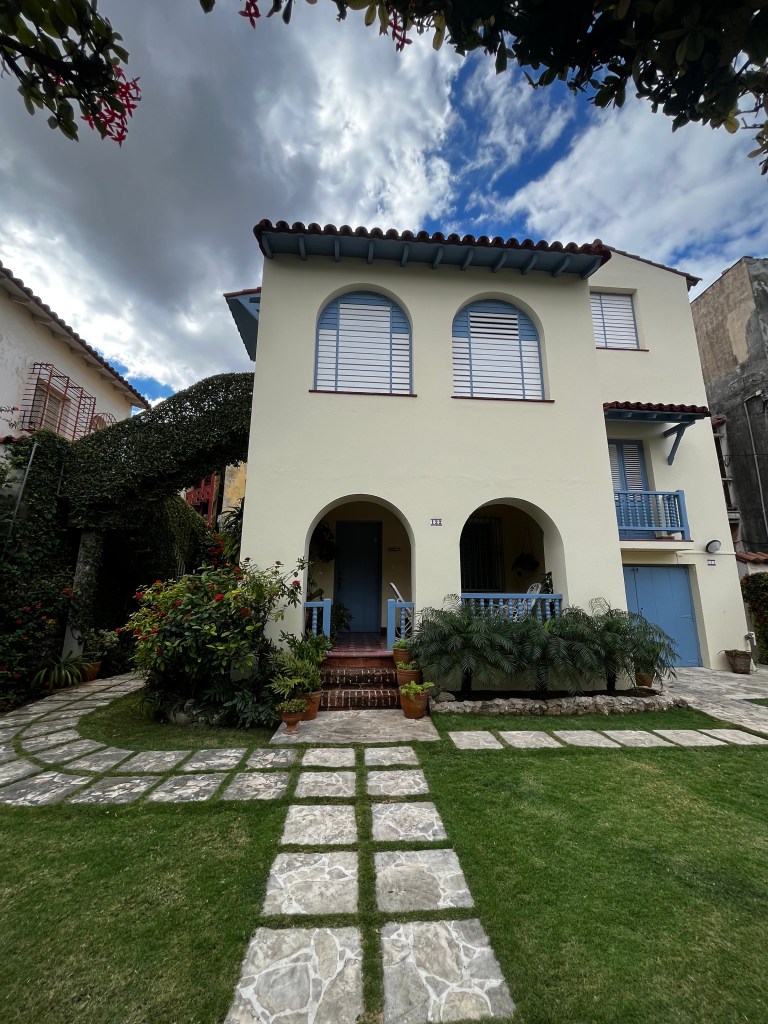
At the casita I was welcomed by Lázara, one of the managers of the house, who explained to me a bunch of basic survival rules for the country. Most importantly, I would have had to exchange money the next morning, getting pesos cubanos in exchange for euros. Normally, the ‘informal market’ gives a better exchange rate than the ‘official market’ in banks and casas de cambio (cadecas). However, when she checked real-time information about the current exchange rate on Facebook, she was surprised to find out the opposite — the official exchange rate had gone down (1 euro : 483 pesos), making it more convenient than the informal one. She therefore gave me a few directions to get started the next morning — first go talk to the employees at the restaurant Amalfi to verify that this information is correct and, if it’s the case, go to a bank. To make sure I would have some breakfast, she handed me two eggs, some cooking oil and some coffee for the next morning, and she lent me 5000 pesos (a little more than 10 euros).
The next morning, after a good night sleep, a cup of percolator-made coffee and one of the two eggs received, I set off for my enterprise of the day of exchanging some money. I walked to the restaurant Amalfi, but it was not open yet. So I first tried to follow Google Maps to the closest bank, which was, however, closed. I headed to the next one, also closed. I spotted a bunch of other banks on Google Maps, which turned out to be just offices, closed to the public (and closed in any sense, today).
I talked to some people on the streets. January 2nd is a ‘día feriado’, so most banks and services are closed; a man suggested that the BFI (Banco Financiero Internacional) at the ‘centro de negocios‘ may be the only one open. A lady was kind enough to help me get an informal taxi, and in just a few minutes, with only 100 pesos, I got there, only to find out — no wonder — that the BFI was also closed.
I took a break from my quest to visit the music school where I will have lessons from next week onwards. On the way back I went for some grocery shopping, hopping from
market to market to have an idea of which products could be found and where (more to be told about this another time).
I resumed my quest for pesos cubanos in the afternoon. I passed by Amalfi, which had opened in the meanwhile, but the young waitress working there had no clue on how to help me. I was roaming around markets and shops when an 8-year-old kid on a toy scooter, named Charen, took interest in my situation and, after asking me to sing a few songs in Italian (as I sang Bella Ciao, her dad sang along), suggested that I ask for help at the random-goods store next door. I was directed towards a hotel, Copacabana, where they would have a money exchange booth, a cadeca. When I got to the hotel, around 3.15 pm, the receptionist told me that the cadeca had just closed, unfortunately, and that I should try next morning — at which time, he was not sure.
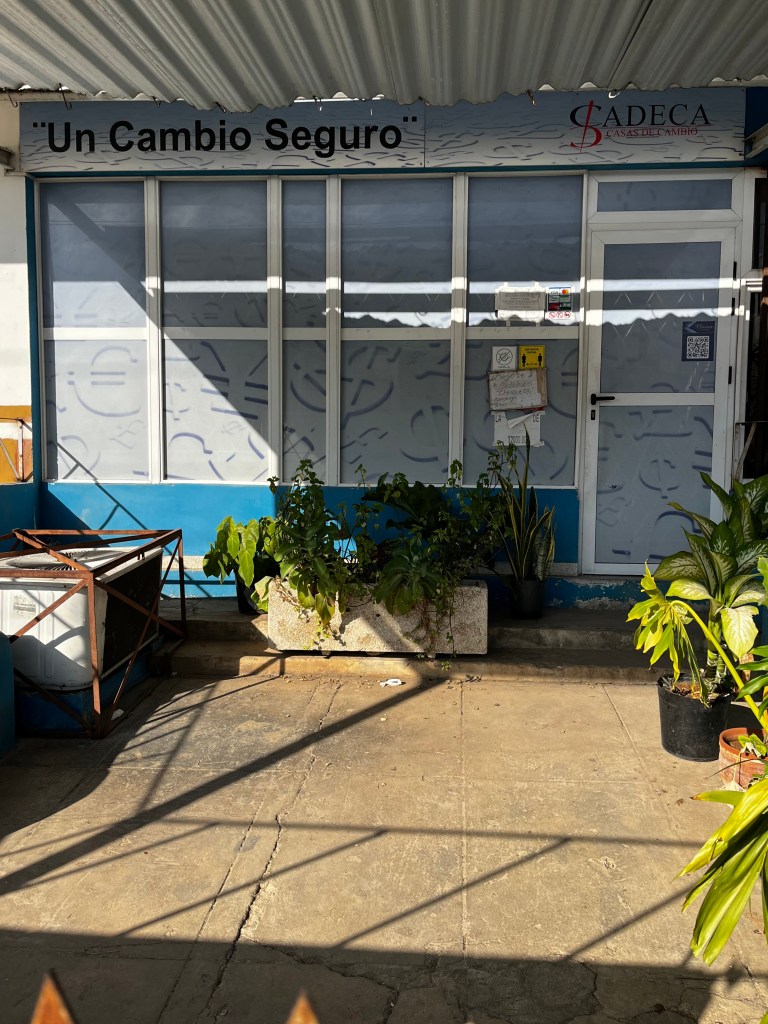
I made a final attempt, with little expectations this time, and walked to another cadeca 20 minutes away from where I was, on Calle 42. Also closed, no surprise there.
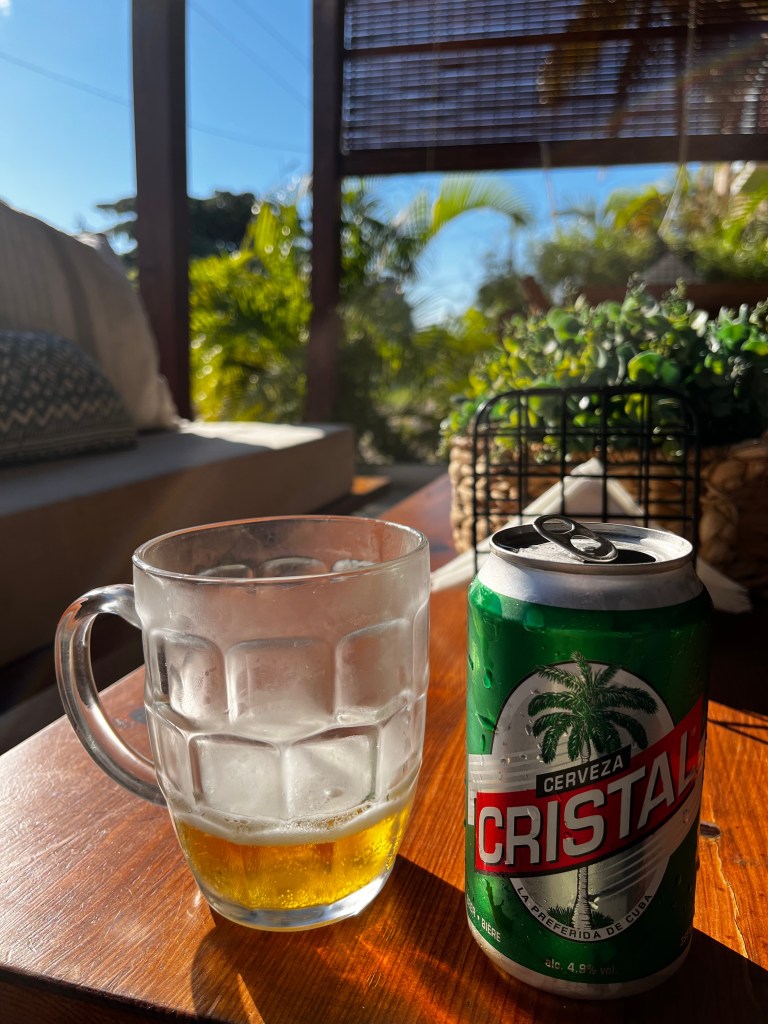
It was about 4 pm. I decided to call it a day. I got a cerveza nacional — Cristal —, while sitting outdoors at a nice café on Calle 42 in the gentle late afternoon sunshine, content with a day of failed attempts and kind encounters on the streets of La Habana. At least I could still count on Lázara’s second egg and coffee for the next morning, next to a beautiful avocado and a few other goods I had been able to collect at the markets.
So here’s the lesson about Cuba I learned through all this. To get what you need in Cuba, asking around is key. Cubans may not always be able to help you, but they will try — worst-case scenario, you will have a nice chat and a story to tell.
 Gracias a la vida
Leave a comment